Blake seeks to provide the Golden String which can lead us through the labyrinth of our experience or his own poetry.

Saturday, March 16, 2013

ETERNAL VALA

British Museum
Illustrations for Young's Night Thoughts
Narcissa 


These are words Blake used to describe the Eternal Vala the Emanation of Luvah, the Zoa of emotion before she became expressed in outward forms and began her descent. She is the 'sinless soul', the 'sweet wanderer', the 'loveliest of the daughters of Eternity.'


The description of the gentle Thel as a reflection in a glass, a shadow in the water, and a lilly are apropos for Vala in her Eternal form:


Thel, Plate 1, (E 3)
"Ah! Thel is like a watry bow. and like a parting cloud.
Like a reflection in a glass. like shadows in the water.
Like dreams of infants. like a smile upon an infants face,       
Like the doves voice, like transient day, like music in the air; 
Ah! gentle may I lay me down, and gentle rest my head.          
And gentle sleep the sleep of death. and gentle hear the voice 
Of him that walketh in the garden in the evening time.

The Lilly of the valley breathing in the humble grass"
She and Jerusalem were like sisters when they cooperated in giving bodies and souls to Jerusalem's children.

Jerusalem, Plate 18, (E 163)
"(For Vala produc'd the Bodies. Jerusalem gave the Souls)" 

Jerusalem, Plate 29 [33], (E 175) 
"Vala replied in clouds of tears Albions garment embracing        

I was a City & a Temple built by Albions Children.
I was a Garden planted with beauty I allured on hill & valley
The River of Life to flow against my walls & among my trees
Vala was Albions Bride & Wife in great Eternity
The loveliest of the daughters of Eternity when in day-break

I emanated from Luvah over the Towers of Jerusalem
And in her Courts among her little Children offering up
The Sacrifice of fanatic love! why loved I Jerusalem!"
Under ideal conditions Vala enjoyed all the contentment of Beulah, but this was when her emotions are not projected outward but remain unexpressed possibilities.

 Four Zoas, Night IX, Page 128, (E 397) 
"My Luvah here hath placd me in a Sweet & pleasant Land
And given me fruits & pleasant waters & warm hills & cool valleys
Here will I build myself a house & here Ill call on his name
Here Ill return when I am weary & take my pleasant rest

So spoke the Sinless Soul & laid her head on the downy fleece 
Of a curld Ram who stretchd himself in sleep beside his mistress
And soft sleep fell upon her eyelids in the silent noon of day

Then Luvah passed by & saw the sinless Soul
And said   Let a pleasant house arise to be the dwelling place
Of this immortal Spirit growing in lower Paradise 

He spoke & pillars were builded & walls as white as ivory
The grass she slept upon was pavd with pavement as of pearl
Beneath her rose a downy bed & a cieling coverd all

Vala awoke. When in the pleasant gates of sleep I enterd
I saw my Luvah like a spirit stand in the bright air 
Round him stood spirits like me who reard me a bright house
And here I see thee house remain in my most pleasant world
...
And on the rivers margin she ungirded her golden girdle
She stood in the river & viewd herself within the watry glass
And her bright hair was wet with the waters She rose up from the river
And as she rose her Eyes were opend to the world of waters
She saw Tharmas sitting upon the rocks beside the wavy sea
He strokd the water from his beard & mournd faint thro the summer vales

And Vala stood on the rocks of Tharmas & heard his mournful voice
...
Then Vala lifted up her hands to heaven to call on Enion
She calld but none could answer her & the Eccho of her voice returnd

Where is the voice of God that calld me from the silent dew
Where is the Lord of Vala dost thou hide in clefts of the rock
Why shouldst thou hide thyself from Vala from the soul that wanders desolate

She ceas'd & light beamd round her like the glory of the morning
PAGE 130 
And She arose out of the river & girded on her golden girdle"

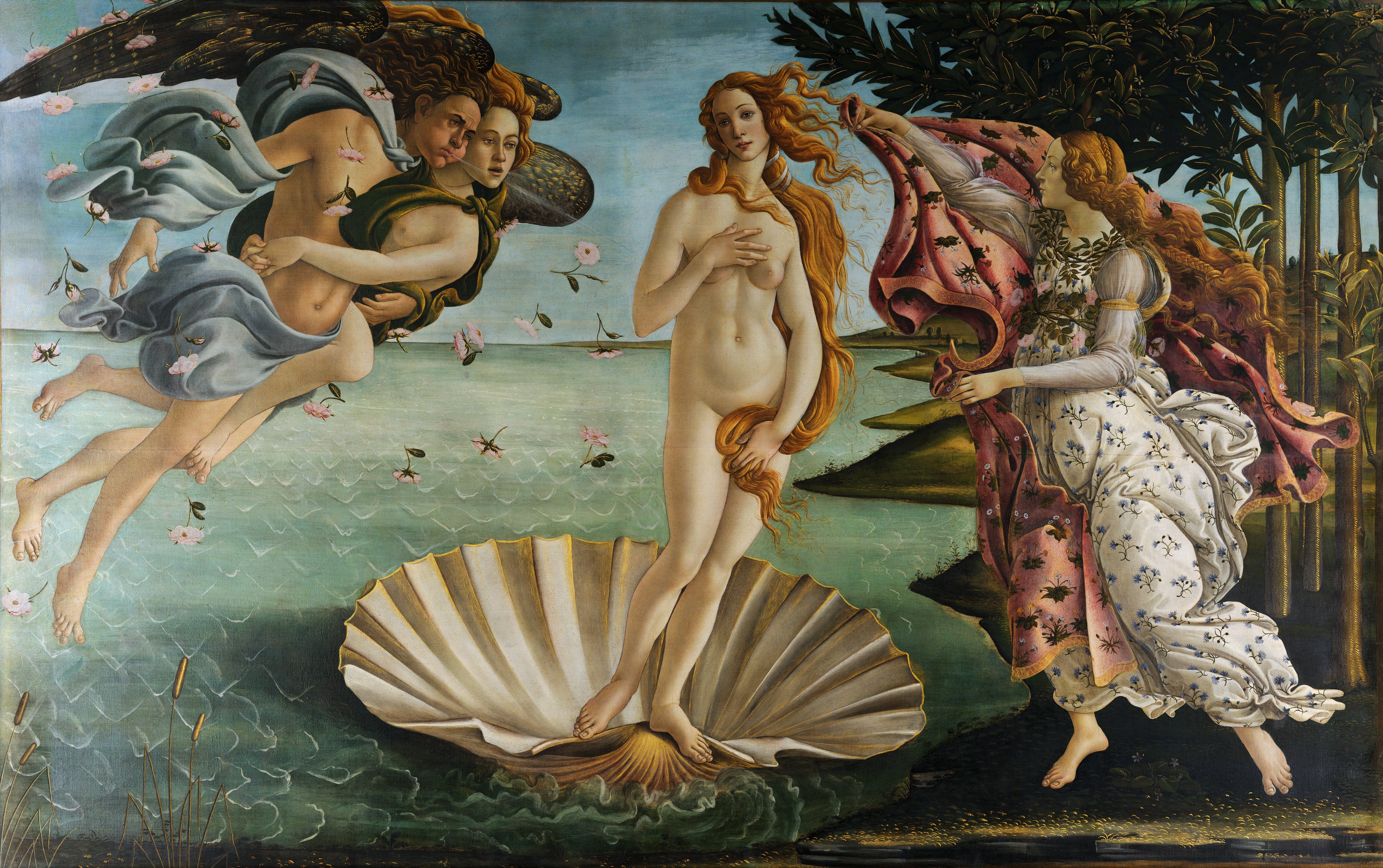
I am reminded of Botticelli's Venus rising from the sea.
. 

Thursday, March 14, 2013

VISIONARY

Kathleen Raine's Blake and Tradition, published in 1968, represented a breakthrough is connecting Blake's thought to the long tradition of esoteric literature. Following the thread of Blake's sources Raine demonstrates how Blake "always responded when reading any abstract work" by creating images with a "concrete visual quality." (Page 221)
 

On page 228 we read: "Again we find Blake's most visionary, most living figure of Los, his atributes and his operations, deeply rooted in a traditional metaphysical theme. Blake's imagination was at all times ready to be kindled by such themes, often in themselves abstract and recondite; and from such germinal ideas we can follow the growth and ramifications of his myths. For Blake no idea seemed to fully exist until it found expression in being, and being in action. For him there were no abstractions; every abstraction he saw (and personified in the figure of Urizen) as a mode of being. 
...
Thus Blake, in the myth of Los creating the sun of nature, re-creates Swedenborg's doctrine of 'influx'. Spiritual light and fire descend from the spiritual world to be molded by Los into the orb of the natural  sun:

British Museum
Song of Los
Plate 8, Copy A 
4: And first from those infinite fires
The light that flow'd down on the winds
lie siez'd; beating incessant, condensing
The subtil particles in an Orb.                    

5: Roaring indignant the bright sparks
Endur'd the vast Hammer; but unwearied
Los beat on the Anvil; till glorious
An immense Orb of fire be fram'd

6: Oft he quench'd it beneath in the Deeps        
Then surveyd the all bright mass. Again
Siezing fires from the terrific Orbs
He heated the round Globe, then beat[,]
While roaring his Furnaces endur'd
The chaind Orb in their infinite wombs     

7: Nine ages completed their circles
When Los heated the glowing mass, casting
It down into the Deeps: the Deeps fled
Away in redounding smoke; the Sun
Stood self-balanc'd. And Los smild with joy.        
He the vast Spine of Urizen siez'd
And bound down to the glowing illusion

8: But no light, for the Deep fled away
On all sides, and left an unform'd
Dark vacuity:"
Book of Los, Plate 5, (E 94) 
. 

Monday, March 11, 2013

FALLING OUTWARD (70)


Wikipedia Commons
Book of Urizen
Copy G, Plate 8

By falling into the outer world of matter man is turned outward from a clear perception of the Divine Vision which resides within his bosom. Inward is the true man, outward is the Self which appears as his divided functions struggling for expression of their individual interests.
Four Zoas, Night II, Page 23, (E 313)
"Rising upon his Couch of Death Albion beheld his Sons
Turning his Eyes outward to Self. losing the Divine Vision
Albion calld Urizen & said. Behold these sickning Spheres
Whence is this Voice of Enion that soundeth in my Porches
Take thou possession! take this Scepter! go forth in my might    
For I am weary, & must sleep in the dark sleep of Death  
Thy brother Luvah hath smitten me but pity thou his youth
Tho thou hast not pitid my Age   O Urizen Prince of Light

Urizen rose from the bright Feast like a star thro' the evening sky
Exulting at the voice that calld him from the Feast of envy     
First he beheld the body of Man pale, cold, the horrors of death
Beneath his feet shot thro' him as he stood in the Human Brain
And all its golden porches grew pale with his sickening light
No more Exulting for he saw Eternal Death beneath
Pale he beheld futurity; pale he beheld the Abyss                
Where Enion blind & age bent wept in direful hunger craving
All rav'ning like the hungry worm, & like the silent grave
Page 24 
Mighty was the draught of Voidness to draw Existence in

Terrific Urizen strode above, in fear & pale dismay
He saw the indefinite space beneath & his soul shrunk with horror
His feet upon the verge of Non Existence; his voice went forth

Luvah & Vala trembling & shrinking, beheld the great Work master
And heard his Word! Divide ye bands influence by influence
Build we a Bower for heavens darling in the grizly deep
Build we the Mundane Shell around the Rock of Albion"

Four Zoas, Night VI, Page 70 (FIRST PORTION), (E 346)    
"Los brooded on the darkness. nor saw Urizen with a Globe of fire
Lighting his dismal journey thro the pathless world of death
Writing in bitter tears & groans in books of iron & brass
The enormous wonders of the Abysses once his brightest joy

For Urizen beheld the terrors of the Abyss wandring among        
The ruind spirits once his children & the children of Luvah
Scard at the sound of their own sigh that seems to shake the immense
They wander Moping in their heart a Sun a Dreary moon
A Universe of fiery constellations in their brain
An Earth of wintry woe beneath their feet & round their loins 
Waters or winds or clouds or brooding lightnings & pestilential plagues
Beyond the bounds of their own self their senses cannot penetrate
As the tree knows not what is outside of its leaves & bark
And yet it drinks the summer joy & fears the winter sorrow
So in the regions of the grave none knows his dark compeer       
Tho he partakes of his dire woes & mutual returns the pang
The throb the dolor the convulsion in soul sickening woes" 
British Library
Four Zoas Manuscript
Page 70

The heart (Luvah), the brain (Urizen), the loins (Urthona) and senses (Tharmas) expressed as outer projections cannot penetrate the inner psyche. Nor can they comprehend one another. Each is bound by his own sickness and woe to his own isolation.


Saturday, March 9, 2013

MORTAL PART

Yale Center for British Art
Wikimedia Jerusalem
Plate 95


For Blake there is no division between God and man. Within man himself the Divine Image is providing through mercy the means through which he may complete the circle and return to immortality following his journey through death.
 
Christ became incarnate in the body of Jesus. The immortal took on mortality to facilitate the return of the mortal to immortality.


Jerusalem, Plate 13, (E 156) 
"(But whatever is visible to the Generated Man,
Is a Creation of mercy & love, from the Satanic Void.)"
Four Zoas, Page 34, (E 321)
"For the Divine Lamb Even Jesus who is the Divine Vision
Permitted all lest Man should fall into Eternal Death

For when Luvah sunk down himself put on the robes of blood
Lest the state calld Luvah should cease. & the Divine Vision
Walked in robes of blood till he who slept should awake
Thus were the stars of heaven created like a golden chain
To bind the Body of Man to heaven from falling into the Abyss"


  The Robe of Blood is the image Blake chose to represent the Body of Man as it became incarnate in flesh. This is the garment which is to be cast off to reveal the Human Form Divine.

Phillips New Testament
2nd Corinthians
5:1-4 - We know, for instance, that if our earthly dwelling were taken down, like a tent, we have a permanent house in Heaven, made, not by man, but by God. In this present frame we sigh with deep longing for the heavenly house, for we do not want to face utter nakedness when death destroys our present dwelling - these bodies of ours. So long as we are clothed in this temporary dwelling we have a painful longing, not because we want just to get rid of these "clothes" but because we want to know the full cover of the permanent house that will be ours. We want our transitory life to be absorbed into the life that is eternal.
 

5:5-8 - Now the power that has planned this experience for us is God, and he has given us his Spirit as a guarantee of its truth. This makes us confident, whatever happens. We realise that being "at home" in the body means that to some extent we are "away" from the Lord, for we have to live by trusting him without seeing him. We are so sure of this that we would really rather be "away" from the body (in death) and be "at home" with the Lord.
5:9-10 - It is our aim, therefore, to please him, whether we are "at home" or "away". For every one of us will have to stand without pretence before Christ our judge, and we shall be rewarded for what we did when we lived in our bodies, whether it was good or bad.
Songs of Innocence & of Experience, Song 52, (E 30) 
"To Tirzah            
Whate'er is Born of Mortal Birth,
Must be consumed with the Earth
To rise from Generation free;
Then what have I to do with thee?

The Sexes sprung from Shame & Pride
Blow'd in the morn: in evening died
But Mercy changd Death into Sleep;
The Sexes rose to work & weep.

Thou Mother of my Mortal part.
With cruelty didst mould my Heart. 
And with false self-decieving tears,
Didst bind my Nostrils Eyes & Ears.

Didst close my Tongue in senseless clay
And me to Mortal Life betray:
The Death of Jesus set me free, 
Then what have I to do with thee?

[text on illustration: It is Raised a Spiritual Body]"
 
Jerusalem, Plate 95, (E 254)
"Her [Brittiannia's] voice pierc'd Albions clay cold ear. he moved upon the Rock
The Breath Divine went forth upon the morning hills, Albion mov'd
Upon the Rock, he opend his eyelids in pain; in pain he mov'd
His stony members, he saw England. Ah! shall the Dead live again

The Breath Divine went forth over the morning hills Albion rose 
In anger: the wrath of God breaking bright flaming on all sides around
His awful limbs: into the Heavens he walked clothed in flames"

Thursday, March 7, 2013

REGENERATION

 When Spectres are given bodies and enter time and space, the world of generation is created for them to occupy. Before they may return to Eden they must gain experience in the physical world. The most troublesome connotation of Generation is that physical life is accompanied by physical death which is unknown in Eden and Beulah. The physical is not infinite or eternal. To facilitate the return Blake introduces regeneration - 'Resurrection from the dead' - as the return path from generation to Eden.   

The image of entering generation as passing through death's door is seen in the frontispiece of Jerusalem. Blake tells us that we do not enter alone:

Milton, Plate 32 [35], (E 132)
"For God himself enters Death's Door always with those that enter 
And lays down in the Grave with them, in Visions of Eternity
Till they awake & see Jesus & the Linen Clothes lying
That the Females had Woven for them, & the Gates of their Fathers House"  

Wikimedia
Blair's The Grave
Irene Langridge
William Blake: A Study of His Life


Death to Generation becomes birth to Eternity. The world of generation becomes the 'void outside of existence' which becomes the womb in which the spiritual body is readied for birth to Eternity. Generation has become the image of regeneration.
Jerusalem, Plate 53, (E 203)
"Here on the banks of the Thames, Los builded Golgonooza,   
Outside of the Gates of the Human Heart, beneath Beulah
In the midst of the rocks of the Altars of Albion. In fears
He builded it, in rage & in fury. It is the Spiritual Fourfold
London: continually building & continually decaying desolate!
In eternal labours: loud the Furnaces & loud the Anvils          
Of Death thunder incessant around the flaming Couches of
The Twentyfour Friends of Albion and round the awful Four
For the protection of the Twelve Emanations of Albions Sons
The Mystic Union of the Emanation in the Lord; Because     
Man divided from his Emanation is a dark Spectre                 
His Emanation is an ever-weeping melancholy Shadow
But she is made receptive of Generation thro' mercy
In the Potters  Furnace, among the Funeral Urns of Beulah"

Four Zoas, Night I, Page 3, (E 301)
"Los was the fourth immortal starry one, & in the Earth
Of a bright Universe Empery attended day & night                 
Days & nights of revolving joy, Urthona was his name
Page 4                                            
In Eden; in the Auricular Nerves of Human life
Which is the Earth of Eden, he his Emanations propagated
Fairies of Albion afterwards Gods of the Heathen, Daughter of Beulah Sing
His fall into Division & his Resurrection to Unity
His fall into the Generation of Decay & Death & his Regeneration 
     by the Resurrection from the dead"         

Milton, Plate 31 [34], (E 130)
"And all the Living Creatures of the Four Elements, wail'd
With bitter wailing: these in the aggregate are named Satan
And Rahab: they know not of Regeneration, but only of Generation
The Fairies, Nymphs, Gnomes & Genii of the Four Elements         
Unforgiving & unalterable: these cannot be Regenerated
But must be Created, for they know only of Generation
These are the Gods of the Kingdoms of the Earth: in contrarious
And cruel opposition: Element against Element, opposed in War
Not Mental, as the Wars of Eternity, but a Corporeal Strife"   
Milton, Plate 41 [48], (E 142)
"These are the destroyers of Jerusalem, these are the murderers
Of Jesus, who deny the Faith & mock at Eternal Life:
Who pretend to Poetry that they may destroy Imagination;
By imitation of Natures Images drawn from Remembrance
These are the Sexual Garments, the Abomination of Desolation
Hiding the Human lineaments as with an Ark & Curtains
Which Jesus rent: & now shall wholly purge away with Fire
Till Generation is swallowd up in Regeneration.

Then trembled the Virgin Ololon & replyd in clouds of despair

Is this our Femin[in]e Portion the Six-fold Miltonic Female      
Terribly this Portion trembles before thee O awful Man
Altho' our Human Power can sustain the severe contentions
Of Friendship, our Sexual cannot: but flies into the Ulro.
Hence arose all our terrors in Eternity! & now remembrance
Returns upon us! are we Contraries O Milton, Thou & I            
O Immortal! how were we led to War the Wars of Death
Is this the Void Outside of Existence, which if enterd into
Plate 42 [49]      
Becomes a Womb? & is this the Death Couch of Albion
Thou goest to Eternal Death & all must go with thee"    
Jerusalem, Plate 7, (E 150)
"Los answer'd...
O that the Lamb
Of God would look upon me and pity me in my fury.                
In anguish of regeneration! in terrors of self annihilation:
Pity must join together those whom wrath has torn in sunder,
And the Religion of Generation which was meant for the destruction
Of Jerusalem, become her covering, till the time of the End.
O holy Generation! [Image] of regeneration!   
O point of mutual forgiveness between Enemies!
Birthplace of the Lamb of God incomprehensible!"

Jerusalem, Plate 62, (E 213)
"Jesus replied. I am the Resurrection & the Life.
I Die & pass the limits of possibility, as it appears
To individual perception. Luvah must be Created                  
And Vala; for I cannot leave them in the gnawing Grave.
But will prepare a way for my banished-ones to return"

Tuesday, March 5, 2013

LOOMS & FURNACES

British Museum
Book of Urizen
Plate 26
Copy D


Industrialization was taking place at a fast pace during Blake's lifetime which extended from 1757 to 1827. The two processes at which we have been looking as images for the transformation of man's psyche, the furnaces and the looms, were rapidly developing as means by which society and the economy were entering a new age. The technical advances made possible by inventions and applications, and the might of empire, spread the means of automated manufacture throughout Britain. Blake latched onto the powerful images of the industrial revolution as symbols for the trauma which modify the inner workings in the brain.


Songs of Innocence & of Experience, Song 55, (E 33)
A DIVINE IMAGE
[An early Song of Experience included in one late copy] 
"Cruelty has a Human Heart
And Jealousy a Human Face
Terror, the Human Form Divine
And Secrecy, the Human Dress

The Human Dress, is forged Iron
The Human Form, a fiery Forge.
The Human Face, a Furnace seal'd
The Human Heart, its hungry Gorge."

Milton, Plate 6, (E 100)
"But now the Starry Heavens are fled from the mighty limbs of Albion

Loud sounds the Hammer of Los, loud turn the Wheels of Enitharmon
Her Looms vibrate with soft affections, weaving the Web of Life
Out from the ashes of the Dead"
But the furnaces and looms likewise were used by Blake to symbolize the loss of human values as mechanization replaced manual skills. Blake saw that the souls who were the inhabitants of Britain were thrown into the furnaces and woven in the looms 'among the dark Satanic wheels.'

Jerusalem, Plate 15, (E 159)
"But first Albion must sleep, divided from the Nations

I see Albion sitting upon his Rock in the first Winter           
And thence I see the Chaos of Satan & the World of Adam
When the Divine Hand went forth on Albion in the mid Winter
And at the place of Death when Albion sat in Eternal Death
Among the Furnaces of Los in the Valley of the Son of Hinnom
PLATE 16
Hampstead Highgate Finchley Hendon Muswell hill: rage loud
Before Bromions iron Tongs & glowing Poker reddening fierce
Hertfordshire glows with fierce Vegetation! in the Forests
The Oak frowns terrible, the Beech & Ash & Elm enroot
Among the Spiritual fires; loud the Corn fields thunder along  
The Soldiers fife; the Harlots shriek; the Virgins dismal groan
The Parents fear: the Brothers jealousy: the Sisters curse
Beneath the Storms of Theotormon & the thundring Bellows
Heaves in the hand of Palamabron who in Londons darkness
Before the Anvil, watches the bellowing flames: thundering       
The Hammer loud rages in Rintrahs strong grasp swinging loud

Round from heaven to earth down falling with heavy blow
Dead on the Anvil, where the red hot wedge groans in pain
He quenches it in the black trough of his Forge; Londons River
Feeds the dread Forge, trembling & shuddering along the Valleys 

Humber & Trent roll dreadful before the Seventh Furnace
And Tweed & Tyne anxious give up their Souls for Albions sake
Lincolnshire Derbyshire Nottinghamshire Leicestershire
From Oxfordshire to Norfolk on the Lake of Udan Adan
Labour within the Furnaces, walking among the Fires              
With Ladles huge & iron Pokers over the Island white.

Scotland pours out his Sons to labour at the Furnaces
Wales gives his Daughters to the Looms; England: nursing Mothers
Gives to the Children of Albion & to the Children of Jerusalem
From the blue Mundane Shell even to the Earth of Vegetation      
Throughout the whole Creation which groans to be deliverd.
Albion groans in the deep slumbers of Death upon his Rock."

Jerusalem, Plate 65, (E 216)
"Then left the Sons of Urizen the plow & harrow, the loom
The hammer & the chisel, & the rule & compasses; from London fleeing
They forg'd the sword on Cheviot, the chariot of war & the battle-ax,
The trumpet fitted to mortal battle, & the flute of summer in Annandale
And all the Arts of Life. they changd into the Arts of Death in Albion.
The hour-glass contemnd because its simple workmanship.
Was like the workmanship of the plowman, & the water wheel,
That raises water into cisterns: broken & burnd with fire:
Because its workmanship. was like the workmanship of the shepherd. 
And in their stead, intricate wheels invented, wheel without wheel:
To perplex youth in their outgoings, & to bind to labours in Albion
Of day & night the myriads of eternity that they may grind
And polish brass & iron hour after hour laborious task!
Kept ignorant of its use, that they might spend the days of wisdom
In sorrowful drudgery, to obtain a scanty pittance of bread:
In ignorance to view a small portion & think that All,
And call it Demonstration: blind to all the simple rules of life."
Alfred Kazin in his introduction to Blake: The Viking Portable Library provides this insight into Blake's first-hand experience of changes induced by the industrial revolution:
"Blake was only one of many Englishmen who felt himself being slowly ground to death, in a world of such brutal exploitation and amid such inhuman ugliness, that the fires of the new industrial furnaces and the cries of the child laborers are always in his work. His poems and designs are meant to afford us spiritual vision; a vision beyond the factory system, the hideous new cities, the degradation of children for the sake of profit, the petty crimes for which children could be hanged. 'England,' a man said to me on V-E day, 'has never recovered from its industrial revolution'; Blake was afraid it could not survive it; the human cost was already too great. He never saw the north of Britain, but the grey squalor of the Clydebrook, the great industrial maw of Manchester and Liverpool, the slums the broken families are remembered in the apocalyptic rant of Jerusalem, where
'Scotland pours out her son to labour in the Furnaces;
Wales gives her daughters to the Loom.'"

.

Sunday, March 3, 2013

URIZEN'S LOOMS

British Museum
Book of Urizen
Plate 23
Copy D


Here, in the Four Zoas, Blake turns the furnaces and looms in a different direction. In the hands of Urizen the furnaces and looms operate in the Caverns of the Grave (the recesses of the unconscious) as instruments of division. The looms  are set to create nets and traps to alter the instinctive energies of of the mind into patterns of abstract reasoning, and sense based weighing and measuring. But were it not for the eagles of imagination bringing light to the deep, the work would not be able to continue. The mind deceives itself by finding delight in thought patterns which will only later reveal their cruel deception.

The cruelest deception is that the mind and body can be separated into two intellects, a male and a female, each with a will of its own. There follows from this illusion the desire to possess and control the opposite nature. Spreading from Urizen and his emanation Ahania, to Los and Enitharmon, and to Luvah and Vala, the disease of a selfish and jealous Selfhood has been established.


Four Zoas, Night II, (E 318-20)
"Then siezd the Lions of Urizen their work, & heated in the forge 
Roar the bright masses, thund'ring beat the hammers, many a pyramid
Is form'd & thrown down thund'ring into the deeps of Non Entity
Heated red hot they hizzing rend their way down many a league
Till resting. each his [center] finds; suspended there they stand
Casting their sparkies dire abroad into the dismal deep          
For measurd out in orderd spaces the Sons of Urizen   
With compasses divide the deep; they the strong scales erect
PAGE 29 
That Luvah rent from the faint Heart of the Fallen Man
And weigh the massy Cubes, then fix them in their awful stations                    
And all the time in Caverns shut, the golden Looms erected
First spun, then wove the Atmospheres, there the Spider & Worm
Plied the wingd shuttle piping shrill thro' all the list'ning threads  
Beneath the Caverns roll the weights of lead & spindles of iron
The enormous warp & woof rage direful in the affrighted deep

While far into the vast unknown, the strong wing'd Eagles bend
Their venturous flight, in Human forms distinct; thro darkness deep
They bear the woven draperies; on golden hooks they hang abroad  
The universal curtains & spread out from Sun to Sun
The vehicles of light, they separate the furious particles
Into mild currents as the water mingles with the wine.

While thus the Spirits of strongest wing enlighten the dark deep
The threads are spun & the cords twisted & drawn out; then the weak   
Begin their work; & many a net is netted; many a net
PAGE 30
Spread & many a Spirit caught, innumerable the nets
Innumerable the gins & traps; & many a soothing flute
Is form'd & many a corded lyre, outspread over the immense
In cruel delight they trap the listeners, & in cruel delight
Bind them, condensing the strong energies into little compass 
...
When Urizen returnd from his immense labours & travels  
Descending She reposd beside him folding him around
In her bright skirts. Astonishd & Confounded he beheld           
Her shadowy form now Separate he shudderd & was silent
Till her caresses & her tears revivd him to life & joy
Two wills they had two intellects & not as in times of old
This Urizen percievd & silent brooded in darkning Clouds
To him his Labour was but Sorrow & his Kingdom was Repentance    
He drave the Male Spirits all away from Ahania
And she drave all the Females from him away

Los joyd & Enitharmon laughd, saying   Let us go down
And see this labour & sorrow; They went down to see the woes
Of Vala & the woes of Luvah, to draw in their delights    

And Vala like a shadow oft appeard to Urizen
PAGE 31 
The King of Light beheld her mourning among the Brick kilns compelld
To labour night & day among the fires, her lamenting voice
Is heard when silent night returns & the labourers take their rest"  
.