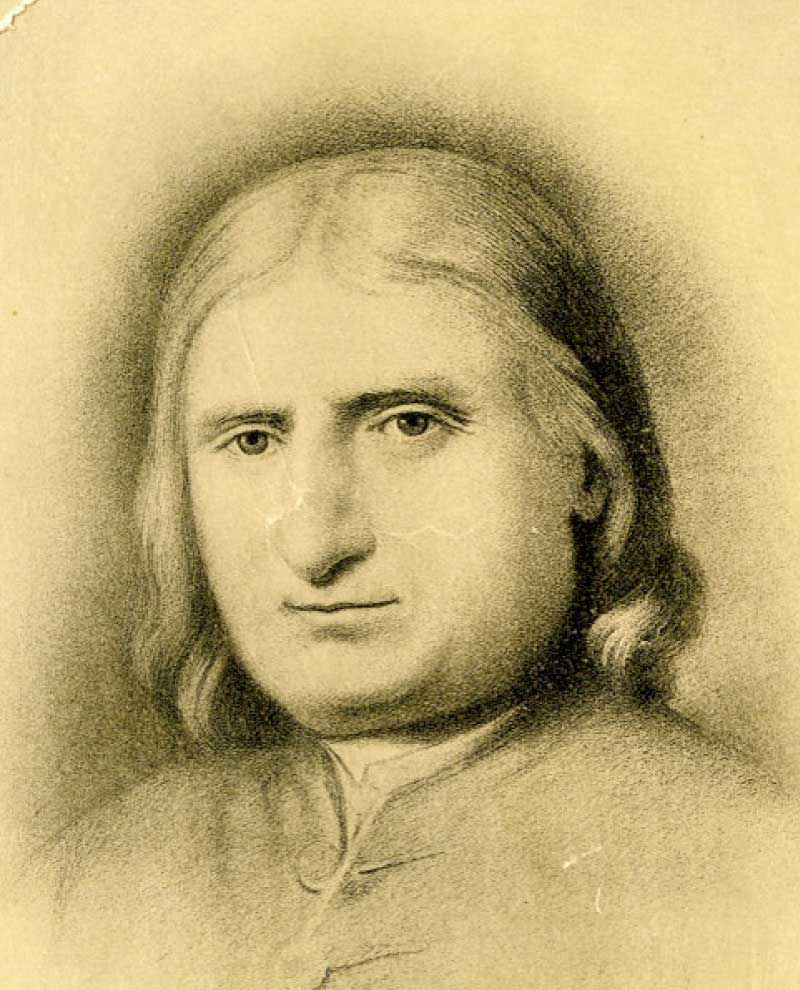
Blake seeks to provide the Golden String which can lead us through the labyrinth of our experience or his own poetry.

Showing posts with label Quaker. Show all posts

Tuesday, February 10, 2026

Blake & Quakers

 Posted to another blog in Dec 2023

William Blake
Illustrations_to_Robert_Blair's_The_Grave
Friendship

Before his death in 2016 my husband, Larry Clayton, wrote this about how William Blake's thought and experience paralleled the development of Quakerism as George Fox brought it into being.

"The proliferation of radical believers brought forth by the Puritan Revolution included a group called Ranters, who had descended from the the 16th Century Familists of Holland. The direct guidance of the Holy Spirit freed the Ranters from most or all legal restraints, and they were given to extreme statements (and demonstrations!) of their freedom. The Society of Friends grew out of this fertile soil.

In the 17th Century George Fox, an idealistic young man, explored the wide variety of religious options present in the Commonwealth. From a strictly scriptural view point he found something lacking in each of them. For example Jesus had insisted that there should be no preeminence among the faithful ("Call no man father"). Fox found an unchristian preeminence in every religious group which he observed.

After several years of spiritual travail Fox came into an experience of grace. Thereafter he enjoyed the direct and continuous presence of the Holy Spirit guiding his words and actions; he recognized no other control. The ultimate anti-authoritarian, Fox began going to what he called the steeple houses, where he proceeded to denounce the preeminent in each of them. Naturally he won a lot of trouble for his pains. He saw the inside of many jails (like Paul had done), but he started something that's still going on. Modern Quakers still try to be the church together without preeminence. Fox and his friends refused to doff their hats and discarded all titles of honor in favor of the familiar 'thee'. Both of these postures were solid blows aimed at the demise of hierarchical society in favor of the brotherhood of man.

Through the centuries the idea of the inner light in a man's heart has caused various excesses, but Fox's heart was good and the Holy Spirit led him to gather numbers of people around the most admirable moral and social values. The strong anti-authoritarianism of the Friends incurred wrath and persecution from many directions; still they multiplied, witnessing to their spiritual power. By the late 18th Century they had become numerous, prosperous and respectable, and no doubt more conformed to the world than Fox's generation had been.

Blake undoubtedly knew something of the power embodied in the Quaker movement. After the Moment of Grace which Blake experienced, the Quaker term 'self-annihilation' became a key construct of his theology. We could relate other Blakean expressions to the Quaker language. Although Blake preferred to engrave his human forms nude, when he did represent man clothed, the traditional Quaker garb appeared as a symbol of the good and faithful man. Study of Blake's works and his biographers has revealed no formal connection with the Quaker community. Nevertheless many of Blake's values clearly resemble those of the Friends:

The Friends were anti-sacramentarian; they did not practice Baptism or Holy Communion, the two Protestant sacraments. In 'A Vision of the Last Judgment ' Blake put an apostle on each side of Jesus representing respectively Baptism and the Lord's Supper, but he proceeded to define them as follows: 'All Life consists of these Two, Throwing off Error and Knaves from our company continually, & Receiving Truth or Wise Men into our Company continually.'

He also said "The outward Ceremony is Antichrist." And in the famous lines of My Spectre he identified the bread and wine with forgiving and being forgiven, without which we can only commune unworthily.

'Throughout all Eternity
I forgive you you forgive me
As our dear Redeemer said 
 This the Wine & this the Bread'

As already noted Fox and his disciples had no use for priests. Blake used priests repeatedly as objects of derision. In his French Revolution for example the archbishop attempts to speak but finds that he can only hiss. In America Blake has the 'Priests in rustling scales Rush into reptile coverts'. Other examples could be given to show that Blake generally thought of priests as serpents though he did not apply this evaluation to the poor and powerless priests of the people.

The Quakers have always been noted for their refusal to participate in war. Blake held similar perspective on war. 
      The Grey Monk
'But vain the Sword & vain the Bow 
They never can work Wars overthrow
The Hermits Prayer & the Widows tear
Alone can free the World from fear

For a Tear is an Intellectual Thing   
And a Sigh is the Sword of an Angel King 
And the bitter groan of the Martyrs woe  
Is an Arrow from the Almighties Bow

The hand of Vengeance found the Bed 
To which the Purple Tyrant fled
The iron hand crushd the Tyrants head 
And became a Tyrant in his stead'  
Throughout the 18th Century the Quakers vigorously opposed the slave trade, which had become a profitable element of England's commercial life. Unlike much of the establishment they had enough integrity to see clearly the spiritual implications of human bondage. They formed the first abolitionist society in England and disowned any Friend involved in the slave trade. John Woolman, perhaps the outstanding Quaker of the century, devoted his life to achieving the abolition of slavery. Blake was no Woolman, but one of his earliest prophetic works, Visions of the Daughters of Albion, is among other things a spirited outcry against slavery.

The Quaker oriented reader who becomes familiar with Blake will find other significant correspondences. (Look at the Pendle Hill document Woolman and Blake.) Of all the religious groups in existence today the Quakers in their theology most nearly approximate the thought forms and theology of William Blake. Borrowing a phrase from Northrup Frye the Quakers and Blake both understood 'the central form of Christianity as a vision rather than as a doctrine or ritual' ".  

Friday, November 14, 2025

MILTON & QUAKERS

 Reposted from July 2019.

The Quaker movement began during the English Civil Wars. John Milton was a young man when George Fox began preaching his message of radical dissent from established religion. Milton became an official of the Commonwealth and the Cromwell government which offered hope for religious freedom but were not able to deliver it. When the monarchy was restored and Milton returned to his quiet life of scholarship he developed an association with Quakers. Although this was a period of Quaker persecution under acts of Parliament which prohibited their meeting and preaching, Milton had friends among the Quakers.

Milton's doctor was a friend of the Quaker Isaac Pennington, who was acquainted with a young Quaker who wanted to study Latin. Pennington arranged with Dr Paget for Thomas Ellwood to read in Latin to the blind Milton. Although Ellwood had some knowledge of Latin, he first received instruction on pronunciation since he was unaware of proper Latin pronunciation. Milton discerned when Ellwood needed help with understanding what he was reading and gave him assistance. A trusting relationship developed as evidenced by Ellwood arranging for a place in a Quaker community for Milton and his family to live when the plague made it unsafe for them to stay in London.

Ellwood continued to be a welcome visitor to Milton's home after the Latin lessons had ceased. On a visit to Milton's home in 1665 Ellwood was shown a manuscript of Paradise Lost which he was allowed to take home and read. When he returned the manuscript to Milton, after some discussion, he inquired of Milton what he may have to say about 'Paradise Found'. From this conversation, Milton later told Ellwood, came the sequel to Paradise LostParadise Regained.

British Museum
John Milton & Thomas Ellwood
Sketch by James Barry,
a friend of William Blake
Ellwood was entrusted with a portion of the papers of Milton at his death. Miltons republican-letters : or a collection of such as were written by command of the late Commonwealth of England from the year 1648 to the year 1659 was published in 1682. The book includes this statement: 'originally writ by the learned John Milton, secretary to those times ; and now translated into English by a wel-wisher of England's honour'.

As a tribute to his teacher and friend, Ellwood wrote an epitaph. Ellwood however turned his interest away from Milton to the publication, in 1694, of George Fox's Journal. The task of editing Fox's Journal rested partly on Milton's encouragement and careful training of Ellwood when he was embarking on a serious path of learning.

From The History of Thomas Ellwood Written by Himself:
'He, on the other hand, perceiving with what earnest desire
I pursued learning, gave me not only all the encouragement but all
the help he could; for, having a curious ear, he understood by my
tone when I understood what I read and when I did not; and
accordingly would stop me, examine me, and open the most difficult
passages to me.'

Blake was of the opinion that we are all capable of performing miracles because astonishing and comforting things are performed, not by us, but through us. Perhaps Milton, Ellwood and Fox could each see his work as miracle.

Annotations to Watson, (E 616)
"Jesus could not do miracles where unbelief hinderd hence we
must conclude that the man who holds miracles to be ceased puts
it out of his own power to ever witness one The manner of a
miracle being performd is in modern times considerd as an
arbitrary command of the
agent upon the patient but this is an impossibility not a miracle
neither did Jesus ever do such a miracle. Is it a greater
miracle to feed five thousand men with five loaves than to
overthrow all the armies of Europe with a small pamphlet
.
look over the events of your own life & if you do not find that
you have both done such miracles & lived by such you do not see
as I do True I cannot do a miracle thro experiment & to
domineer over & prove to others my superior power as neither
could Christ But I can & do work such as both astonish &
comfort me & mine
"


Friday, September 8, 2023

Enlightenments

Previously posted on Dec 17, 2017

We all reach God in some way, but among those closest to God were several Soldiers of the Cross. These examples all show a long continued inner turmoil and struggle rewarded in due course by that special gift that Eternity offers to the most faithful.
-----------------------------------------------------
 
His heart leapt for joy
 “Now after I had received that opening from the Lord that to be trained at Oxford or Cambridge was not enough to equip a man to be a minister of Christ, I respected the priests less, and looked more after the dissenting Christians. And among them I saw there was some tenderness, and many of them came afterwards to be convinced, for they had some openings from God. But as I had forsaken all the priests, so I left the separatist Preachers, also, together with those called the most experienced people. For I saw there was no one among them all who could speak to my condition. And when all my hope in them and in all men were gone, so that I had nothing outwardly to help me, nor could I even tell what to do, then, Oh then, I heard a voice which said, “There is one — even Christ Jesus — who can speak to thy condition!” And when I heard it, my heart leapt for joy. Then the Lord showed me why there was no one on the earth who could speak to my condition. The reason was that I was to give him all the glory. For all are concluded under sin, and shut up in unbelief as I had been, so that Jesus Christ might have the pre-eminence, as the one who enlightens, and gives grace, faith and power. So, when God works, who shall prevent it? And I knew this experimentally through my experiences.”"
(From the Journal of George Fox)
------------------------------------------------------------------------------

The Loss of the Burden in Pilgrims Progress

Blake's Illustrations to Bunyan's Pilgrims Progress
 
Christian is at the Cross; his burden is cast off (at the lower left of the picture):
"To take my cross up day by day,
And serve the Lord with fear.
Now I saw in my dream, that they went on,
and Great-Heart before them. So they went,
and came to the place where Christian's
burden fell off his back and tumbled into a
sepulchre. Here then they made a pause; and
here also they blessed God."
(from Pilgrim's Progress)
 
"finally he was relieved by the text, 'The blood of Jesus Christ His Son cleanseth us from all sin.'" John Bunyan's Conversion
 
----------------------------------------------

His Heart was strangely warmed

.John Wesley was a super-Christian at Oxford. He demanded rigorous adherence to certain practices, carried out by his disciples; they were called methodists. Once ordained he went to the colony of Georgia to save the heathen, but he came to realize that he needed salvation himself.

Returning to England there was a terrible storm at sea and everyone quailed with fear for their lives; everyone that is except a group of Moravians who continued in prayer and showed great equanimity.

Back in London Wesley continued to worry about his salvation until, in 1738:
"In the evening I went very unwillingly to a society in Aldersgate Street, where one was reading Luther’s preface to the Epistle to the Romans. About a quarter before nine, while he was describing the change which God works in the heart through faith in Christ, I felt my heart strangely warmed. I felt I did trust in Christ, Christ alone, for salvation; and an assurance was given me that he had taken away my sins, even mine, and saved me from the law of sin and death."

He was generally considered to be one of the greatest men in 18th century England and was thought by many to have saved England from Revolution.
 
-------------------------------------------------------

The Truchsessian Museum

The Enlightenment of William Blake was on this wise:
"O lovely Felpham, parent of Immortal Friendship, to thee I am eternally
indebted for my three years rest from perturbation and the strength I now enjoy. Suddenly, on the day after visiting the Truchsessian Gallery of
pictures, I was again enlightened with the light I enjoyed in my youth, and which has for exactly twenty years been closed from me as by a door and by window-shutters. Consequently I can, with confidence, promise you ocular demonstration of my altered state on the plates I am now engraving after Romney, whose spiritual aid has not a little conduced to my restoration to the light of Art." (Erdman 756)

He wrote this in Letter 51 (To William Hayley) 23 October 1804.

-----------------------------------------------------

Renunciation

".....Albert Schweitzer's biography of J. S. Bach, written in 1905, had also proved an immediate success. At 30 years of age Schweitzer was tall, broad-shouldered, darkly handsome, and a witty charismatic writer, preacher, and lecturer: clearly, a bright future lay before him. However, one spring morning in 1905, he experienced a stunning religious revelation: it came to him that at some point in the years just ahead he must renounce facile success and devote himself unsparingly to the betterment of mankind's condition.
Accordingly, several years later, Schweitzer threw over his several careers as author, lecturer, and organ recitalist and plunged into the study of medicine - his aim being to go to Africa as a medical missionary. He won his medical degree in 1912. The year before, he had married Helene Bresslau, a professor's daughter who had studied nursing in order to work at his side in Africa; in 1919 the couple had a daughter, Rhena.

In 1913 the Schweitzers journeyed to what was then French Equatorial Africa. There, after various setbacks, they founded the Albert Schweitzer Hospital at Lambaréné, on the Ogooué River, "at the edge of the primeval forest." This area now lies within the independent West African republic of Gabon. Funds were scarce and equipment primitive, but native Africans thronged to the site, and in the decades that followed, many thousands were treated." (From Answers.Com)


Saturday, May 22, 2021

USING GIFTS

           George Fox 
by Unidentified Artist
William Blake 
by John Linnell


From the 2009 post Honoring Gifts.

Each one speaks according to the gifts he has received. The knowledge of this insight and of its corollary - that we recognize and respect the gifts of others as well as our own gifts - overcomes barriers among us. Here are four statement about the innate gifts from four sources. Out of their own unique gifts, each of these men express congruent ideas from varied perspectives. Let's listen to June Singer speaking of Carl Jung, and to statements from William Blake, George Fox, and Paul the Apostle.

Dr. Singer: from an Interview in 1998 - Complete Interview

"Jung’s great contribution to psychotherapy was his affirmation of the genius (daemon, guiding spirit) in every individual. He had the greatest respect for the individual, a trust in the authenticity of each person’s inner self-knowledge. Consequently he did not often assert his own views as an analyst, but rather worked to evoke the analysand’s own unconscious material and allow it to speak for itself. Trust in the unconscious, not a blind trust but the way you trust any teacher–you must find out for yourself what the wise person can teach you."

William Blake, Jerusalem, Plate 91

"Go, tell them that the Worship of God, is honouring his gifts
In other men: & loving the greatest men best, each according
To his Genius: which is the Holy Ghost in Man; there is no other
God, than that God who is the intellectual fountain of Humanity;
He who envies or calumniates: which is murder & cruelty,
Murders the Holy-one: Go tell them this & overthrow their cup,
Their bread, their altar-table, their incense & their oath:
Their marriage & their baptism, their burial & consecration:
I have tried to make friends by corporeal gifts but have only
Made enemies: I never made friends but by spiritual gifts;
By severe contentions of friendship & the burning fire of thought.
He who would see the Divinity must see him in his Children
One first, in friendship & love; then a Divine Family, & in the midst
Jesus will appear
; so he who wishes to see a Vision; a perfect Whole
Must see it in its Minute Particulars;"

George Fox, Journal

"...So, Friends, come into that which is over all the spirits of the world, fathoms all the spirits of the world, and stands in the patience; with that, ye may see where others stand, and reach that which is of God in every one. Here is no strife, no contention, out of transgression; for he that goeth into strife, and into contention, is [away] from the pure spirit...."

Paul, Letter to the Ephesians

4:11-13 - "His 'gifts to men' were varied. Some he made his messengers, some prophets, some preachers of the Gospel; to some he gave the power to guide and teach his people. His gifts were made that Christians might be properly equipped for their service, that the whole body might be built up until the time comes when, in the unity of the common faith and common knowledge of the Son of God, we arrive at real maturity - that measure of development which is meant by the "fullness of Christ".

4:14-16 - "We are not meant to remain as children at the mercy of every chance wind of teaching and the jockeying of men who are expert in the craft presentation of lies. But we are meant to hold firmly to the truth in love, and to grow up in every way into Christ, the head. For it is from the head that the whole body, as a harmonious structure knit together by the joints with which it is provided, grows by the proper functioning of individual parts to its full maturity in love."

Learn more about Quakers and Blake from Larry.


Saturday, July 6, 2019

MILTON & QUAKERS

Reposted from March 2012.
 
The Quaker movement began during the English Civil Wars. Milton was a young man when George Fox began preaching his message of radical dissent from established religion. Milton became an official of the Commonwealth and the Cromwell government which offered hope for religious freedom but were not able to deliver it. When the monarchy was restored and Milton returned to his quiet life of scholarship he developed an association with Quakers. Although this was a period of Quaker persecution under acts of Parliament which prohibited their meeting and preaching, Milton had friends among the Quakers.

Milton's doctor was a friend of the Quaker Isaac Pennington, who was acquainted with a young Quaker who wanted to study Latin. Pennington arranged with Dr Paget for Thomas Ellwood to read in Latin to the blind Milton. Although Ellwood had some knowledge of Latin, he first received instruction on pronunciation since he was unaware of proper Latin pronunciation. Milton discerned when Ellwood needed help with understanding what he was reading and gave him assistance. A trusting relationship developed as evidenced by Ellwood arranging for a place in a Quaker community for Milton and his family to live when the plague made it unsafe for them to stay in London.


British Museum
John Milton & Thomas Ellwood
Sketch by James Barry, a friend of William Blake

Ellwood continued to be a welcome visitor to Milton's home after the Latin lessons had ceased. On a visit to Milton's home in 1665 Ellwood was shown a manuscript of Paradise Lost which he was allowed to take home and read. When he returned the manuscript to Milton, after some discussion, he inquired of Milton what he may have to say about 'Paradise Found'. From this conversation, Milton later told Ellwood, came the sequel to Paradise Lost: Paradise Regained.

Ellwood was entrusted with a portion of the papers of Milton at his death. Miltons republican-letters : or a collection of such as were written by command of the late Commonwealth of England from the year 1648 to the year 1659 was published in 1682. The book includes this statement: 'originally writ by the learned John Milton, secretary to those times ; and now translated into English by a wel-wisher of England's honour'.

As a tribute to his teacher and friend, Ellwood wrote an epitaph which can be read at this site. Ellwood however turned his interest away from Milton to the publication, in 1694, of George Fox's Journal. The task of editing Fox's Journal rested partly on Milton's encouragement and careful training of Ellwood when he was embarking on a serious path of learning.

From The History of Thomas Ellwood Written by Himself:
'He, on the other hand, perceiving with what earnest desire
I pursued learning, gave me not only all the encouragement but all
the help he could; for, having a curious ear, he understood by my
tone when I understood what I read and when I did not; and
accordingly would stop me, examine me, and open the most difficult
passages to me.'

Blake was of the opinion that we are all capable of performing miracles because astonishing and comforting things are performed, not by us, but through us. Perhaps Milton, Ellwood and Fox could each see his work as miracle.

Annotations to Watson, (E 616)
"Jesus could not do miracles where unbelief hinderd hence we
must conclude that the man who holds miracles to be ceased puts
it out of his own power to ever witness one The manner of a
miracle being performd is in modern times considerd as an
arbitrary command of the
agent upon the patient but this is an impossibility not a miracle
neither did Jesus ever do such a miracle. Is it a greater
miracle to feed five thousand men with five loaves than to
overthrow all the armies of Europe with a small pamphlet
.
look over the events of your own life & if you do not find that
you have both done such miracles & lived by such you do not see
as I do True I cannot do a miracle thro experiment & to
domineer over & prove to others my superior power as neither
could Christ But I can & do work such as both astonish &
comfort me & mine
"

.
.

Thursday, July 19, 2018

Fox & Blake

First posted Oct 2009.

George Fox of course lived in the 17th century; Blake in the late 18th and early 19th century. But what did they have in common?

Anyone familiar with the Pendle Hill pamphlets should look at No 177: Woolman and Blake

Jerusalem, Plate 52, (E 201) 
"Those who Martyr others or who cause War are Deists, but never
can be Forgivers of Sin.  The Glory of Christianity is, To
Conquer by Forgiveness.  All the Destruction therefore, in
Christian Europe has arisen from Deism, which is Natural
Religion. 

 I saw a Monk of Charlemaine 
Arise before my sight 
  I talkd with the Grey Monk as we stood
In beams of infernal light

  Gibbon arose with a lash of steel         
And Voltaire with a wracking wheel
  The Schools in clouds of learning rolld 
Arose with War in iron & gold.

  Thou lazy Monk they sound afar          
In vain condemning glorious War           
  And in your Cell you shall ever dwell    
Rise War & bind him in his Cell.

  The blood. red ran from the Grey Monks side
His hands & feet were wounded wide
  His body bent, his arms & knees          
Like to the roots of ancient trees

  When Satan first the black bow bent
And the Moral Law from the Gospel rent
  He forgd the Law into a Sword
And spilld the blood of mercys Lord.
     
  Titus! Constantine!  Charlemaine!       
O Voltaire! Rousseau! Gibbon! Vain
  Your Grecian Mocks & Roman Sword      
Against this image of his Lord!

  For a Tear is an Intellectual thing;           
And a Sigh is the Sword of an Angel King
  And the bitter groan of a Martyrs woe     
Is an Arrow from the Almighties Bow!"
Titus! Constantine! Charlemagne Luther: what did all these men have in common? Blake cited them as names of churches (heavens), but what else did they have in common? They were all involved in war!

Many Christians consider Constantine a great hero because he legalized Christianity in the Roman Empire. Less well known is the fact that he ordained (and required) uniformity of belief among Christians. Thereafter it was the non-orthodox who were illegal, a long line of them going all the way down to Quakers and beyond. What they all had in common was insisting on a direct relationship with God, not through a priest. Blake was one of them!

Why Luther? well he supported the Protestant Princes' war against the Pope (it was called the Thirty Years War). On occasion he incited people to violence.

Blake virtually equated the state church with war; he wrote:

Songs of Experience, Songs 46, (E 26)
London
"How the Chimney-sweeper's cry
Every black'ning Church appalls;
And the hapless Soldier's sigh
Runs in blood down Palace walls".

People don't allow themselves to be oppressed en mass without resisting, to be ruled by foreigners. Oh no! In the New Age Blake looked forward to the end of war:
"Empire is no more! and now the
lion and wolf shall cease."

British Museum 
Watercolor Illustration for
Young's Night Thoughts 
Marriage of Heaven and Hell, Plate 25, (E 44)
"A Song of Liberty 
... 
Empire is no more! and now the lion & wolf shall cease.                         
                          Chorus
Let the Priests of the Raven of dawn, no longer in deadly black, with hoarse note curse the sons of joy.
Nor his accepted brethren whom, tyrant, he calls free; lay the bound or build the roof.
Nor pale religious letchery call that virginity, that wishes but acts not!
For every thing that lives is Holy"
 

Sunday, July 15, 2018

OPENING A CENTER

First posted Aug 2011. 

I came across this review of Fearful Symmetry which had been written in 1947 the year the book was published. My surprise was in learning that the review had been written by a man who was our friend from 1988 to 2007. Larry has written of Alfred in the post titled Severe Contentions of Friendship. It does my heart good to make a connection among Blake, Frey and Friend Alfred Ames.
Fearful Symmetry: A Study of William Blake
Princeton, NJ: Princeton University Press, 1947
Review by Alfred C. Ames

“The whole purpose of this book . . . is to establish Blake as a typical poet and his thinking as typically poetic thinking” [426], says Professor Frye at the end of Fearful Symmetry.
In the past twenty years, there have been many other expositions of Blake’s visions, succeeding Foster Damon’s pioneering specific commentary and annotation. . . . None of these other books should be permitted to jostle Fearful Symmetry aside. Frye, as no other before him, develops Blake as a “typical poet”; he intends his book to be not only a vade mecum for the students of Blake, but for the larger body of the students of poetry.
 

Frye conducts his ambitious study with unflagging energy, great enthusiasm, and immense
erudition. Random dipping into the volume would be frightening, and passages quoted out of context might well appear cabalistic. Read straight through in sequence, however, Fearful symmetry is a lucid if exacting book.
 

The typical poet, Frye believes, as he becomes wiser becomes less lyrical and more didactic, progressively rejecting the “cloven fictions” that delight and instruction are separable objectives and that subject and object of experience are discrete entities. The poet becomes a visionary, perceiving and pointing out an archetypal vision of creation, fall, redemption, and apocalypse. The business of the visionary is “to proclaim the Word of God to society under the domination of Satan” [336]. What the Word of God is according to Blake, Frye asserts, is what the Word of God is according to Job, the Hebrew prophets, the framers of Greek or Icelandic myth, Spenser, Milton, Keats, or other great authentic poets. In escaping selfhood and attaining vision, we readers of poetry will “become what we behold, for the image of God is the form of human life, and the reality of ourselves” [401].
 

Blake differs from Shakespeare, for example, not in the profundities, which are common in
both, but on the surface. “Homer and Shakespeare are not superficial, but they do possess a surface, and reward superficial reading more than it deserves” [421]. The lack of “surface” in Blake’s prophetic books prohibits superficial reading. Blake created his own system, as precise utterance of his vision required. He despised empirical logic rooted in sense perceptions, but his own system has the rigor and generality prized by logicians. The difficulty is in the fact that his allegorical symbols are unfamiliar. Either they have a meaning defined largely by their places in the system, or they are meaningless. Thus Blake compels his reader to learn the grammar of his visions.
 

Frye in this book achieves substantial stature as student and teacher of the grammar of large-scale poetic vision. The vision, embracing the pre-Adamic fall (in which the whole natural universe is involved) and an apocalypse beyond history, is not to be had within the cave of shadows, but is vouchsafed only to “the man with an opened center” [349]. The careful and sympathetic reader of Fearful Symmetry will have great openings."
Wikimedia Commons
Watercolor Illustration to Young's 
Night Thoughts

Milton, PLATE 28 [30], (E 126)
"The Sons of Ozoth within the Optic Nerve stand fiery glowing
And the number of his Sons is eight millions & eight.
They give delights to the man unknown; artificial riches
They give to scorn, & their posessors to trouble & sorrow & care,
Shutting the sun. & moon. & stars. & trees. & clouds. & waters.
And hills. out from the Optic Nerve & hardening it into a bone
Opake. and like the black pebble on the enraged beach.
While the poor indigent is like the diamond which tho cloth'd
In rugged covering in the mine, is open all within
And in his hallowd center holds the heavens of bright eternity
"
.

Sunday, December 17, 2017

Enlightenments

First posted on Wednesday, March 09, 2011

We all reach God in some way, but among those closest to God were several Soldiers of the Cross. These examples all show a long continued inner turmoil and struggle rewarded in due course by that special gift that Eternity offers to the most faithful.
-----------------------------------------------------

His heart leapt for joy

“Now after I had received that opening from the Lord that to be trained at Oxford or Cambridge was not enough to equip a man to be a minister of Christ, I respected the priests less, and looked more after the dissenting Christians. And among them I saw there was some tenderness, and many of them came afterwards to be convinced, for they had some openings from God. But as I had forsaken all the priests, so I left the separatist Preachers, also, together with those called the most experienced people. For I saw there was no one among them all who could speak to my condition. And when all my hope in them and in all men were gone, so that I had nothing outwardly to help me, nor could I even tell what to do, then, Oh then, I heard a voice which said, “There is one — even Christ Jesus — who can speak to thy condition!” And when I heard it, my heart leapt for joy. Then the Lord showed me why there was no one on the earth who could speak to my condition. The reason was that I was to give him all the glory. For all are concluded under sin, and shut up in unbelief as I had been, so that Jesus Christ might have the pre-eminence, as the one who enlightens, and gives grace, faith and power. So, when God works, who shall prevent it? And I knew this experimentally through my experiences.”"
(From the Journal of George Fox)
------------------------------------------------------------------------------

The Loss of the Burden in Pilgrims Progress

Blake's Illustrations to Bunyan's Pilgrims Progress

Christian is at the Cross; his burden is cast off (at the lower left of the picture):
"To take my cross up day by day,
And serve the Lord with fear.
Now I saw in my dream, that they went on,
and Great-Heart before them. So they went,
and came to the place where Christian's
burden fell off his back and tumbled into a
sepulchre. Here then they made a pause; and
here also they blessed God."
(from Pilgrim's Progress)
----------------------------------------------

His Heart was strangely warmed

.John Wesley was a super-Christian at Oxford. He demanded rigorous adherence to certain practices, carried out by his disciples; they were called methodists. Once ordained he went to the colony of Georgia to save the heathen, but he came to realize that he needed salvation himself.

Returning to England there was a terrible storm at sea and everyone quailed with fear for their lives; everyone that is except a group of Moravians who continued in prayer and showed great equanimity.

Back in London Wesley continued to worry about his salvation until, in 1738:
"In the evening I went very unwillingly to a society in Aldersgate Street, where one was reading Luther’s preface to the Epistle to the Romans. About a quarter before nine, while he was describing the change which God works in the heart through faith in Christ, I felt my heart strangely warmed. I felt I did trust in Christ, Christ alone, for salvation; and an assurance was given me that he had taken away my sins, even mine, and saved me from the law of sin and death."

He was generally considered to be one of the greatest men in 18th century England and was thought by many to have saved England from Revolution.
-------------------------------------------------------

The Truchsessian Museum

The Enlightenment of William Blake was on this wise:
"O lovely Felpham, parent of Immortal Friendship, to thee I am eternally
indebted for my three years rest from perturbation and the strength I now enjoy. Suddenly, on the day after visiting the Truchsessian Gallery of
pictures, I was again enlightened with the light I enjoyed in my youth, and which has for exactly twenty years been closed from me as by a door and by window-shutters. 


Consequently I can, with confidence, promise you ocular demonstration of my altered state on the plates I am now engraving after Romney, whose spiritual aid has not a little conduced to my restoration to the light of Art." (Erdman 756)

He wrote this in Letter 51 (To William Hayley) 23 October 1804.
-----------------------------------------------------

Renunciation

".....Albert Schweitzer's biography of J. S. Bach, written in 1905, had also proved an immediate success. At 30 years of age Schweitzer was tall, broad-shouldered, darkly handsome, and a witty charismatic writer, preacher, and lecturer: clearly, a bright future lay before him. However, one spring morning in 1905, he experienced a stunning religious revelation: it came to him that at some point in the years just ahead he must renounce facile success and devote himself unsparingly to the betterment of mankind's condition.
 

Accordingly, several years later, Schweitzer threw over his several careers as author, lecturer, and organ recitalist and plunged into the study of medicine - his aim being to go to Africa as a medical missionary. He won his medical degree in 1912. The year before, he had married Helene Bresslau, a professor's daughter who had studied nursing in order to work at his side in Africa; in 1919 the couple had a daughter, Rhena.
 

In 1913 the Schweitzers journeyed to what was then French Equatorial Africa. There, after various setbacks, they founded the Albert Schweitzer Hospital at Lambaréné, on the Ogooué River, "at the edge of the primeval forest." This area now lies within the independent West African republic of Gabon. Funds were scarce and equipment primitive, but native Africans thronged to the site, and in the decades that followed, many thousands were treated." (From Answers.Com) 
.

Friday, November 10, 2017

POETIC GENIUS

All Religions are One, (E 1)
"Principle 1st 
That the Poetic Genius is
the True Man, and that
the body or outward form
of Man is derived from the
Poetic Genius."

A message delivered many years ago by a friend at a Quaker Meeting was essentially that what divides us is language and labels; what unites us is values and principles. The import of this statement is that divisions are created among us when we name someone or something as falling into the category of good or evil, acceptable or unacceptable. Avoiding giving an act or a person a label prevents it from being put it in a category which removes the necessity of responding from a personal evaluation. The object or activity is rejected or accepted without considering the context in which it occurs because it has previously been allocated its worth. If one looks deeper from the perspective of a structure of values and principles which are shared as common to humanity, the divisions can be overcome in order to conserve the fundamental universal truths. 

The Poetic Genius is the early terminology which Blake used to refer to the underlying truth which is shared because it is common to all mankind. It is as if it were in the DNA.
  
This passage from Grammatical Man by Jeremy Campbell echos in scientific language something of the process which Blake envisioned in spiritual language:

"The message of DNA is intrinsic. If we speak in metaphor of the 'ideas' contained in it, then those ideas are innate. They do not come from outside, from the environment, even though external chemical messages certainly play a role in the development of the living system. The original script of the DNA message, the organism's lifelong store of information, specifying its structure and growth, is placed for safekeeping in the nucleus, at the quiet center of the cell, and is housed in long, thin strands called chromosomes. There is no direct traffic with the world outside. Its symbol systems are communicated to the chemical factories in the outer, working domain of the cell by another kind of nucleic acid molecule called messenger RNA, which carries a copy of sections of the DNA message to a place where proteins are assembled." (Page 93)

Blake saw that man's outer actions are determined by his inner proclivities which are derived from the Poetic Genius buried deep within his being. The Poetic Genius does not interact with the external world but depends upon expressing itself through ideas which arise in the minds of beings who act as vehicles for carrying them. The Poetic Genius, like the individual amino acids of a strand of DNA, is the shared heritage of all humanity. The individual humans are bodies woven from particles of spirit separated from the Poetic Genius. Separation without communication, or breakdowns of linkages, lead to the finely woven web of life collapsing to a web of death.      
 

Awareness that there are hidden links which bind together the images of truth which inhabit our brains, releases a new stage of development which Blake calls the Babe. Whether we see our oneness as a function of our DNA, or the Poetic Genius, or the Holy Spirit, we can recognize that there is a transforming power in being linked in unseen ways that are active below the surface of ordinary consciousness.

Could we practice compassion, integrity and inclusiveness if love, honesty and connectivity were not dwelling within our Souls?

Milton, Plate 26 [28], (E 123)
"And these the Labours of the Sons of Los in Allamanda:
And in the City of Golgonooza: & in Luban: & around
The Lake of Udan-Adan, in the Forests of Entuthon Benython       
Where Souls incessant wail, being piteous Passions & Desires
With neither lineament nor form but like to watry clouds
The Passions & Desires descend upon the hungry winds
For such alone Sleepers remain meer passion & appetite;
The Sons of Los clothe them & feed & provide houses & fields     

And every Generated Body in its inward form,
Is a garden of delight & a building of magnificence,
Built by the Sons of Los in Bowlahoola & Allamanda
And the herbs & flowers & furniture & beds & chambers
Continually woven in the Looms of Enitharmons Daughters          
In bright Cathedrons golden Dome with care & love & tears
For the various Classes of Men are all markd out determinate

In Bowlahoola; & as the Spectres choose their affinities
So they are born on Earth, & every Class is determinate
But not by Natural but by Spiritual power alone, Because         
The Natural power continually seeks & tends to Destruction
Ending in Death: which would of itself be Eternal Death
And all are Class'd by Spiritual, & not by Natural power.

And every Natural Effect has a Spiritual Cause, and Not
A Natural: for a Natural Cause only seems, it is a Delusion      
Of Ulro: & a ratio of the perishing Vegetable Memory."

Jerusalem, Plate 20, (E 165)
"Jerusalem answer'd with soft tears over the valleys.

O Vala what is Sin? that thou shudderest and weepest
At sight of thy once lov'd Jerusalem! What is Sin but a little
Error & fault that is soon forgiven; but mercy is not a Sin
Nor pity nor love nor kind forgiveness! O! if I have Sinned      
Forgive & pity me! O! unfold thy Veil in mercy & love!
Slay not my little ones, beloved Virgin daughter of Babylon
Slay not my infant loves & graces, beautiful daughter of Moab
I cannot put off the human form I strive but strive in vain
When Albion rent thy beautiful net of gold and silver twine;
Thou hadst woven it with art, thou hadst caught me in the bands
Of love; thou refusedst to let me go: Albion beheld thy beauty
Beautiful thro' our Love's comeliness, beautiful thro' pity.
The Veil shone with thy brightness in the eyes of Albion,
Because it inclosd pity & love; because we lov'd one-another!
Albion lov'd thee! he rent thy Veil! he embrac'd thee! he lov'd thee!
Astonish'd at his beauty & perfection, thou forgavest his furious love:
I redounded from Albions bosom in my virgin loveliness.
The Lamb of God reciev'd me in his arms he smil'd upon us:

He made me his Bride & Wife: he gave thee to Albion.             
Then was a time of love: O why is it passed away!" 
Jerusalem, Plate 34 [38], (E 180)
"for Cities
Are Men, fathers of multitudes, and Rivers & Mount[a]ins
Are also Men; every thing is Human, mighty! sublime!
In every bosom a Universe expands, as wings
Let down at will around, and call'd the Universal Tent.          
York, crown'd with loving kindness. Edinburgh, cloth'd
With fortitude as with a garment of immortal texture
Woven in looms of Eden, in spiritual deaths of mighty men

Who give themselves, in Golgotha, Victims to Justice; where
There is in Albion a Gate of precious stones and gold            
Seen only by Emanations, by vegetations viewless,
Bending across the road of Oxford Street; it from Hyde Park
To Tyburns deathful shades, admits the wandering souls
Of multitudes who die from Earth: this Gate cannot be found
PLATE 35 [39]
By Satans Watch-fiends tho' they search numbering every grain
Of sand on Earth every night, they never find this Gate.
It is the Gate of Los. Withoutside is the Mill, intricate, dreadful
And fill'd with cruel tortures; but no mortal man can find the Mill
Of Satan, in his mortal pilgrimage of seventy years              

For Human beauty knows it not: nor can Mercy find it!"

Four Zoas, Night VIII, PAGE 100 (FIRST PORTION), (E 372) 
"From out the War of Urizen & Tharmas recieving them   
Into his hands. Then Enitharmon erected Looms in Lubans Gate
And calld the Looms Cathedron in these Looms She wove the Spectres
Bodies of Vegetation Singing lulling Cadences to drive away
Despair from the poor wandering spectres and Los loved them 
With a parental love for the Divine hand was upon him
And upon Enitharmon & the Divine Countenance shone
In Golgonooza Looking down the Daughters of Beulah saw
With joy the bright Light & in it a Human form
And knew he was the Saviour Even Jesus & they worshipped 

Astonishd Comforted Delighted in notes of Rapturous Extacy  
All Beulah stood astonishd Looking down to Eternal Death
They saw the Saviour beyond the Pit of death & destruction
For whether they lookd upward they saw the Divine Vision
Or whether they lookd downward still they saw the Divine Vision 
Surrounding them on all sides beyond sin & death & hell

Enitharmon wove in tears singing Songs of Lamentation
And pitying comfort as she sighd forth on the wind the Spectres
Also the Vegetated bodies which Enitharmon wove  -

Opend within their hearts & in their loins & in their brain 
To Beulah & the Dead in Ulro descended from the War
Of Urizen & Tharmas & from the Shadowy females clouds
And some were woven single & some two fold & some three fold 
In Head or Heart or Reins according to the fittest order
Of most merciful pity & compassion to the Spectrous dead"
Auguries of Innocence, (E 491)
"It is right it should be so 
Man was made for Joy & Woe
And when this we rightly know
Thro the World we safely go
Joy & Woe are woven fine 
A Clothing for the soul divine 
Under every grief & pine
Runs a joy with silken twine
The Babe is more than swadling Bands
Throughout all these Human Lands
Tools were made & Born were hands 
Every Farmer Understands
Every Tear from Every Eye
Becomes a Babe in Eternity
This is caught by Females bright
And returnd to its own delight" 
 
There is more to the image from Plate 57 of Jerusalem than three lovely ladies extruding fibers that create links outside their bodies. Less noticeable than the figures is the globe of the earth which is mostly covered by text. The upper section bears the image of St. Paul's Cathedral (which Blake associated with the established church), and the words York and London which Blake saw as attempts to build God's kingdom in the natural world through material means. The lower section of the globe shows the image of a Gothic cathedral and the word Jerusalem, both symbols in Blake's lexicon for the unseen world of spirit. Thus the image represents outer and inner activities attempting to articulate and integrate the world of spirit and the world of matter, and to bring them together in cooperation. 
.
.

Saturday, October 8, 2016

Enlightenments

First posted March 2011.
 
We all reach God in some way, but among those closest to God were several Soldiers of the Cross. These examples all show a long continued inner turmoil and struggle rewarded in due course by that special gift that Eternity offers to the most faithful.
-----------------------------------------------------

His heart leapt for joy

“Now after I had received that opening from the Lord that to be trained at Oxford or Cambridge was not enough to equip a man to be a minister of Christ, I respected the priests less, and looked more after the dissenting Christians. And among them I saw there was some tenderness, and many of them came afterwards to be convinced, for they had some openings from God. But as I had forsaken all the priests, so I left the separatist Preachers, also, together with those called the most experienced people. For I saw there was no one among them all who could speak to my condition. And when all my hope in them and in all men were gone, so that I had nothing outwardly to help me, nor could I even tell what to do, then, Oh then, I heard a voice which said, “There is one — even Christ Jesus — who can speak to thy condition!” And when I heard it, my heart leapt for joy. Then the Lord showed me why there was no one on the earth who could speak to my condition. The reason was that I was to give him all the glory. For all are concluded under sin, and shut up in unbelief as I had been, so that Jesus Christ might have the pre-eminence, as the one who enlightens, and gives grace, faith and power. So, when God works, who shall prevent it? And I knew this experimentally through my experiences.”"
(From the Journal of George Fox)

------------------------------------------------------------------------------

The Loss of the Burden in Pilgrims Progress

Blake's Illustrations to Bunyan's Pilgrims Progress
Christian is at the Cross; his burden is cast off (at the lower left of the picture):
"To take my cross up day by day,
And serve the Lord with fear.
Now I saw in my dream, that they went on,
and Great-Heart before them. So they went,
and came to the place where Christian's
burden fell off his back and tumbled into a
sepulchre. Here then they made a pause; and
here also they blessed God."
(from Pilgrim's Progress)

----------------------------------------------

His Heart was strangely warmed

.John Wesley was a super-Christian at Oxford. He demanded rigorous adherence to certain practices, carried out by his disciples; they were called methodists.
Once ordained he went to Georgia to save the heathen, but he came to realize that
he needed salvation himself.

Returning to England there was a terrible storm at sea and everyone quailed with fear for their lives; everyone that is except a group of Moravians who continued in prayer and showed great equanimity.

Back in London Wesley continued to worry about his salvation until, in 1738:
"In the evening I went very unwillingly to a society in Aldersgate Street, where one was reading Luther’s preface to the Epistle to the Romans. About a quarter before nine, while he was describing the change which God works in the heart through faith in Christ, I felt my heart strangely warmed. I felt I did trust in Christ, Christ alone, for salvation; and an assurance was given me that he had taken away my sins, even mine, and saved me from the law of sin and death."

He was generally considered to be the greatest man in the 18th century and was thought by many to have saved England from Revolution.
----------------------------------------------------------------------

The Truchsessian Museum

The Enlightenment of William Blake was on this wise:
"O lovely Felpham, parent of Immortal Friendship, to thee I am eternally
indebted for my three years rest from perturbation and the strength I now
enjoy. Suddenly, on the day after visiting the Truchsessian Gallery of
pictures, I was again enlightened with the light I enjoyed in my youth, and
which has for exactly twenty years been closed from me as by a door and by window-shutters. Consequently I can, with confidence, promise you ocular demonstration of my altered state on the plates I am now engraving after
Romney, whose spiritual aid has not a little conduced to my restoration to
the light of Art." (Erdman 756)
He wrote this in Letter 51 (To William Hayley) 23 October 1804.

-----------------------------------------------------

Renunciation

".....Albert Schweitzer's biography of J. S. Bach, written in 1905, had also proved an immediate success. At 30 years of age Schweitzer was tall, broad-shouldered, darkly handsome, and a witty charismatic writer, preacher, and lecturer: clearly, a bright future lay before him. However, one spring morning in 1905, he experienced a
stunning religious revelation: it came to him that at some point in the years just ahead he must renounce facile success and devote himself unsparingly to the betterment of mankind's condition.Accordingly, several years later, Schweitzer threw over his several careers as author, lecturer, and organ recitalist and plunged into the study of medicine - his aim being to go to Africa as a medical missionary. He won his medical degree in 1912. The year before, he had married Helene Bresslau, a professor's daughter who had studied nursing in order to work at his side in Africa; in 1919 the couple had a daughter, Rhena.
In 1913 the Schweitzers journeyed to what was then French Equatorial Africa. There, after various setbacks, they founded the Albert Schweitzer Hospital at Lambaréné, on the Ogooué River, "at the edge of the primeval forest." This area now lies within the independent West African republic of Gabon. Funds were scarce and equipment primitive, but native Africans thronged to the site, and in the decades that followed, many thousands were treated." (From Answers.Com)
----------------------------------------
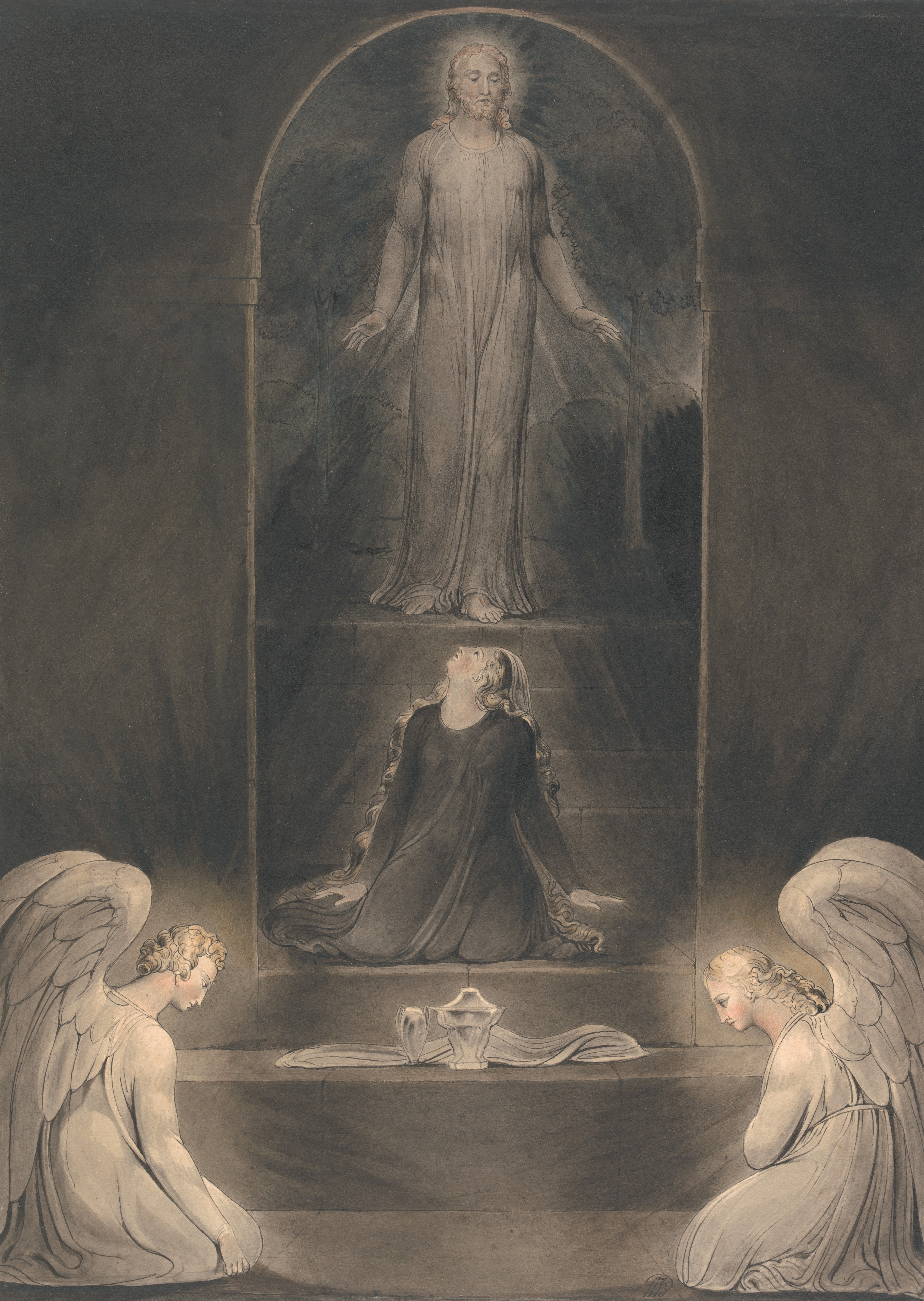
Magdalene Encounters the Risen Christ 

Yale Center for British Art
Mary Magdalen at the Sepulchre


Jerusalem, Plate 62, (E 213)
"But I thy Magdalen behold thy Spiritual Risen Body"
 
 .