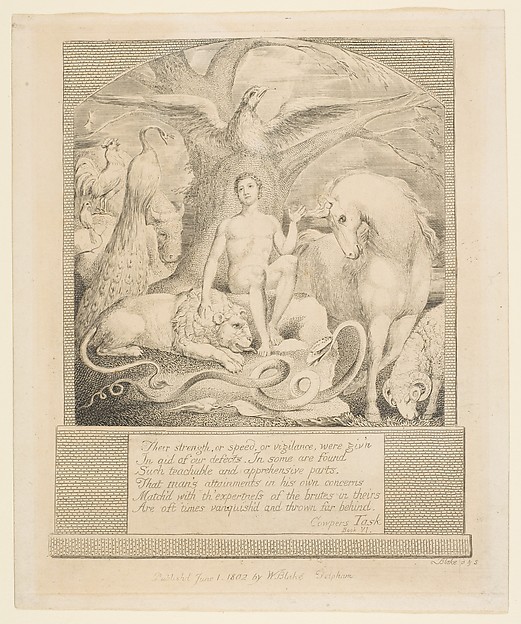
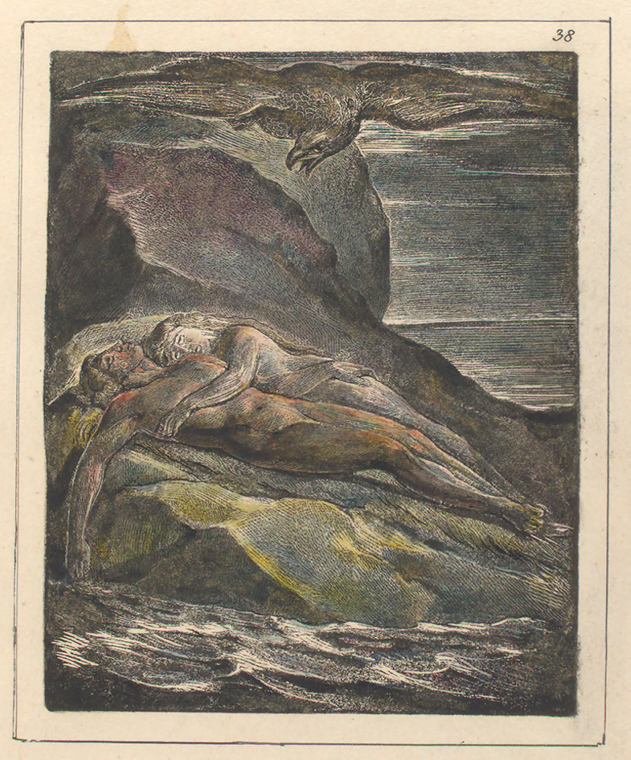
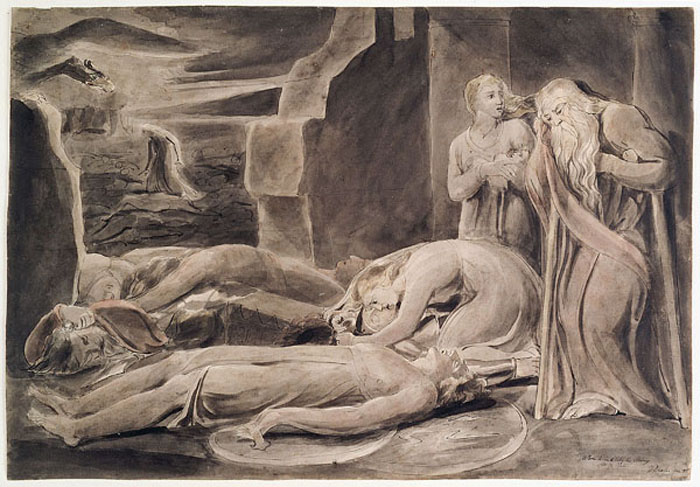
Blake seeks to provide the Golden String which can lead us through the labyrinth of our experience or his own poetry.

Thursday, May 21, 2015

SYSTEMS

John M Barry in Roger Williams and The Creation of the American Soul: Church, State, and the Birth of Liberty contrasted the beliefs of Puritans and Quakers:
 

"Puritans believed in predestination, that God elected saints for reasons beyond understanding, and that no human action had any bearing on election. Yet they also saw great personal struggle and living a godly as symptomatic of - although the cause of - salvation. Those who were saved worked, they did the hardest work, and Puritans no matter how confident of their own fates had to  live with the terror of doubt. They saw Christ as a historical figure, and an individual, indivisible like all other individuals. They believed that God was rational, and that the world was an ordered place. They believed that careful scholarly study of the Scripture was necessary to understand God's desires and their own tasks in the world.

Quakers rejected every element of those beliefs. They believed in universal redemption, and they denied that man was forever burdened with original sin. They discarded all outward forms of worship and they turned their thoughts inward, see the' light within,' the 'inner light, which they believed came from God and was part of God and lay within themselves. Indeed they raised humans nearly to divine status because they believed the Christ was inside them. They substituted human judgement for Scripture and the rule of law. They eliminated the ministry and all forms of worship. They considered men and women virtually equal and allowed women to s peak in worship. The also justified riotous behavior and even disobedience to the law. If the word 'antinomian' derives from 'against law,' this  is Antinomianism raised by orders of magnitude. Any one of these beliefs was, to Calvinists, blasphemy; taken together they certainly justified a death sentence." 

British Museum
Illustrations  to Young's Night Thoughts
These statements about Puritans and Quakers in Colonial America in the late 17th century may provide some insight into Blake's resolve to create his own system rather than adopting another man's. John Milton and John Bunyan were both Puritans whose writing Blake respected, although he didn't altogether agree with them. Blake never mentions anything about Quakers although he shared most to the tenets of his religion with them. Liberty to practice religion as he choose was more important than associating himself with any group.


Marriage of Heaven & Hell, Plate 21, (E 42)
  "I have always found that Angels have the vanity to speak of
themselves as the only wise; this they do with a confident
insolence sprouting from systematic reasoning:
  Thus Swedenborg boasts that what he writes is new; tho' it
is only the Contents or Index of already publish'd books"


Jerusalem, Plate 10, (E 153)
"Therefore Los stands in London building Golgonooza
Compelling his Spectre to labours mighty; trembling in fear
The Spectre weeps, but Los unmovd by tears or threats remains

I must Create a System, or be enslav'd by another Mans          
I will not Reason & Compare: my business is to Create

So Los, in fury & strength:"

. 

Tuesday, May 19, 2015

VISIONARY BLAKE

From the Victorian web we find a quote from John Linnell about Blake published in The Life of John Linnell by A. T. Story in 1892:
"I soon encountered Blake's peculiarities, and was sometimes taken aback by the boldness of some of his assertions. I never saw anything the least like madness. I never opposed him spitefully, as many did. But being really anxious to fathom, if possible, the amount of truth that there might be in his most startling assertions, I generally met with a sufficiently rational explanation in the most really friendly and conciliatory tone. Even to John Varley, to whom I had introduced Blake, and who readily devoured all the marvellous in Blake's most extravagant utterances — even to Varley Blake would occasionally explain, unasked, how he believed that both Varley and I could see the same visions as he saw — making it evident to me that Blake claimed the possession of some powers, only in a greater degree, that all men possessed, and which they undervalued in themselves, and lost through love of sordid pursuits, pride, vanity, and the unrighteous Mammon." 


Fitzwilliam Museum Visionary Head

Linnell introduced Blake to his former teacher John Varley who seemed to have been fascinated by Blake's ability to receive visions. Varley who was a successful artist in his own right, had a strong interest in the supernatural. He practiced astrology and physiognomy and pursued any avenue into the occult which he could find. Blake was pleased to receive the attention of Varley and during 1819-21 spent many hours with Varley and Linnell seeking otherworldly experiences.

Blake developed a knack for picturing characters with whom he has no physical acquaintance for the entertainment of Varley. As a group these pictures became known as Blake's Visionary Heads. Blake may have been willing to attach the word 'visionary' to them because they incorporated vision to some extent, but objectively we can see that memory and reasoning played important roles in these portrayals. Varley placed greater credence in the visionary quality of Blake's productions created during these late night sessions than did Blake himself.

The head which bears the title The Portrait of a Man who instructed Mr Blake in Painting &c in his Dreams is informative. We see the face of a man which is both idealized and exaggerated. The impression it gives is of intense concentration or meditation. The enlarged asymmetric eyes are the center of attention. The shape of the head is stylized as an egg. The skull shows the form of the brain which resides within. In the center of the forehead is a figure which resembles the burning bush which alerted Moses to the presence of God. (Linnell made a copy which is in the Tate)

Wikimedia Commons
Self-portrait
1802
Blake had created a self-portrait in 1802 which seems to have influenced the image he produced of The Portrait of a Man who instructed Mr Blake in Painting &c in his Dreams. The self-portrait shows Blake as he appeared when one was looking 'with' the eye. The visionary head shows Blake, who was self-taught, as he appeared when one was looking 'thru' the eye. The figure which Blake saw with his visionary eye incorporated influences which made him an artist. It seems that Blake brought together visual memories, analytic skills, and perception of visionary imagery to make this particular picture. Through the fusion of varied influences Blake skillfully communicated his non-material or visionary perception of himself.      

Descriptive Catalogue, (E 541)
"Weaving the winding sheet of Edward's race by means of
sounds of spiritual music and its accompanying expressions of
articulate speech is a bold, and daring, and most masterly
conception, that the public have embraced and approved with
avidity.  Poetry consists in these conceptions; and shall
Painting be confined to the sordid drudgery of facsimile
representations of merely mortal and perishing substances, and
not be as poetry and music are, elevated into its own proper
sphere of invention and visionary conception? No, it shall not
be so!  Painting, as well as poetry and music, exists and exults
in immortal thoughts.

...
  A Spirit and a Vision are not, as the
modern philosophy supposes, a cloudy vapour or a
nothing: they are organized and minutely articulated beyond all
that the mortal and perishing nature can produce.  He who does
not imagine in stronger and better lineaments, and in stronger
and better light than his perishing mortal eye can see does not
imagine at all.  The painter of this work asserts that all his
imaginations appear to him infinitely more perfect and more
minutely organized than any thing seen by his
mortal eye.  Spirits are organized men:"

.

Sunday, May 17, 2015

BLAKE'S EAGLE

Images are from illustrations to Hayley's Ballads, Gray's Bard, Marriage of Heaven and Hell, Visions of Daughters of Albion, America and Milton. The eagle appears in the image Breach in City also.


The eagle is the closest approximation to a symbol for the imagination which Blake provides. Blake's eagle whose natural proclivity is to dwell on the cliffs and soar in the skies, is familiar too with the caverns of the mind and and the battlefield strewn with corpses. To Blake it feeds on flesh as well as on the delight of sex; it is acquainted with suffering as well as joy.

Blake pictures the eagle as present with man throughout the cycle of life beginning in the cradle.

The author of Deuteronomy uses the eagle's provision for its young to symbolize the care and leadership which the Lord gives to his people. The closeness of God to those under his care, makes of God not a stranger but a friend.


Deuteronomy 32
[9] For the LORD's portion is his people; Jacob is the lot of his inheritance.
[10] He found him in a desert land, and in the waste howling wilderness; he led him about, he instructed him, he kept him as the apple of his eye.
[11] As an eagle stirreth up her nest, fluttereth over her young, spreadeth abroad her wings, taketh them, beareth them on her wings:
[12] So the LORD alone did lead him, and there was no strange god with him.

Four Zoas, Night VIII, Page 112, (E 384)
"O how the horrors of Eternal Death take hold on Man  
His faint groans shake the caves & issue thro the desolate rocks
PAGE 113 [109]
And the Strong Eagle now with num[m]ing cold blighted of feathers
Once like the pride of the sun now flagging in cold night
Hovers with blasted wings aloft watching with Eager Eye
Till Man shall leave a corruptible body
he famishd hears him groan
And now he fixes his strong talons in the pointed rock
And now he beats the heavy air with his enormous wings
Beside him lies the Lion dead & in his belly worms
Feast on his death till universal death devours all
And the pale horse seeks for the pool to lie him down & die
But finds the pools filled with serpents devouring one another
He droops his head & trembling stands & his bright eyes decay
These are the Visions of My Eyes the Visions of Ahania"

Isaiah 53
[3] He is despised and rejected of men; a man of sorrows, and acquainted with grief: and we hid as it were our faces from him; he was despised, and we esteemed him not.
[4] Surely he hath borne our griefs, and carried our sorrows: yet we did esteem him stricken, smitten of God, and afflicted.
[5] But he was wounded for our transgressions, he was bruised for our iniquities: the chastisement of our peace was upon him; and with his stripes we are healed.

.

Friday, May 15, 2015

BREACH IN CITY

   Ackland Art Museum, UNC
Breach in the City the Morning after a Battle

                                                          
Blake exhibited two painting at the Royal Academy April 1784. The pictures were inscribed Breach in the City the Morning after a Battle, and War unchained by an Angel Fire, Pestilence and Famine, Following. Blake's work received unfavorable criticism in the Morning Chronicle of May 27. Although Breach in the City (of 1784) is believed lost, Blake did not abandon the idea which had inspired it. Three similar compositions, which still exist, were executed before 1805.
 

The city was an image Blake used for the condition of humanity. London was humanity in the throes of experience, struggling to be set free from forces which limited mankind's development. Babylon was mankind which had sunk into depravity in pursuing empire. Jerusalem, whose name means peace, was mankind under the guidance of her better angels. Jerusalem was the realization of the vision of God within the Soul. Babylon and Jerusalem were contraries. Golgonooza was the attempt to make Jerusalem manifest in the temporal world.
 

If the city is breached, mankind becomes susceptible to losing the ground he has gained in his efforts to realize Jerusalem. Blake returned to the image of the breach in the city because it represented the results of following 'the Serpent.' Such activities as war and greed and vengeance are deadly in themselves, but more threatening is the consequences borne by those not directly involved.
   
Vision of Last Judgment, (E 563)
"By this it will be seen that I do not consider either the Just
or the Wicked to be in a Supreme State but to be every one of
them States of the Sleep which the Soul may fall into in its
Deadly Dreams of Good & Evil when it leaves Paradise
following the Serpent"


Jerusalem,Plate 43 [29], (E 199)
"Then the Divine Vision like a silent Sun appeard above
Albions dark rocks: setting behind the Gardens of Kensington
On Tyburns River, in clouds of blood: where was mild Zion Hills
Most ancient promontory, and in the Sun, a Human Form appeard
And thus the Voice Divine went forth upon the rocks of Albion   

I elected Albion for my glory; I gave to him the Nations,
Of the whole Earth. he was the Angel of my Presence: and all
The Sons of God were Albions Sons: and Jerusalem was my joy.
The Reactor hath hid himself thro envy. I behold him.
But you cannot behold him till he be reveald in his System      
Albions Reactor must have a Place prepard: Albion must Sleep
The Sleep of Death, till the Man of Sin & Repentance be reveald.
Hidden in Albions Forests he lurks: he admits of no Reply
From Albion: but hath founded his Reaction into a Law
Of Action, for Obedience to destroy the Contraries of Man[.]    
He hath compelld Albion to become a Punisher & hath possessd
Himself of Albions Forests & Wilds! and Jerusalem is taken!
The City of the Woods in the Forest of Ephratah is taken!
London is a stone of her ruins; Oxford is the dust of her walls!
Sussex & Kent are her scatterd garments: Ireland her holy place!
And the murderd bodies of her little ones are Scotland and Wales
The Cities of the Nations are the smoke of her consummation
The Nations are her dust! ground by the chariot wheels
Of her lordly conquerors, her palaces levelld with the dust

I come that I may find a way for my banished ones to return     
Fear not O little Flock I come! Albion shall rise again.

So saying, the mild Sun inclosd the Human Family."   

. 

Wednesday, May 13, 2015

CONFRONTATION WITH SATAN

National Gallery of Victoria, Melbourne
Jerusalem
Plate 51
As the inner struggle cited in the post BINDING SATAN became fuel for the composition of Milton, Blake's confrontation with Satan in the form of Schofield became embodied in the confrontations with error which he depicted in Jerusalem.


Northrop Frye in his introduction to Selected Poetry and Prose of William Blake writes on Page xvi:   "Blake's second experience was his trial for treason as a result of a quarrel with the soldier Schofield. Blake found Schofield trespassing in his garden and threw him out, whereupon Schofield went to the magistrate and swore that Blake had damned the king and hoped and expected to see Napoleon win the war. Schofield had, fortunately for Blake, overestimated judicial hysteria in wartime. But Blake had glimpsed for a moment the lethal malignity in human nature which the Crucifixion the central event of history. This experience forms the autobiographical core of Jerusalem, which like Milton expands from an event in Blake's life to the apocalyptic form of the same event, the salvation of the world by God contrasted with that which Blake calls 'Druidism,' or the attempt by man by searching to find out God with the object of torturing and killing him."

William R Hughes in Jerusalem: William Blake characterizes this incident thus:
"But he had been in real danger, and he experienced the whole episode as something having a deep allegorical meaning. Satan had struck him outwardly as well as inwardly, and had been defeated." (Page 16)


Alexander Gilchrist found this newspaper account of Blake's trial and included it in his biography, The Life of William Blake. (Page 198)

"Reference obligingly made for me by the present editor,
to the file of the Sussex Advertiser, at that date the only
Sussex newspaper, discovers a report (l6th January, 1804)
of this singular trial, one its editor little thought would
ever become curious and interesting. The report is after
the curt fashion of local journals in those backward days.


  'William Blake, an engraver at Felpham, was tried on
a charge exhibited against him by two soldiers, for having
uttered seditious and treasonable expressions, such as
' D — n the King, d — -n all his subjects, d — n his soldiers,
they are all slaves ; when Bonaparte comes, it will be cut-
throat for cut-throat, and the weakest must go the wall ; I
will help him,' &c. &c.'
...
In his cross-examination
of the accuser, he 'most happily exposed,' says Hayley,
'the falsehood and malignity of the charge,' and also
spoke very eloquently for his client although, in the midst
of his speech, seized with illness, and concluding it with
difficulty. Blake's neighbours joined Hayley in giving
him the same character of habitual gentleness and peace-
ableness ; which must have a little astonished the soldier,
after his peculiar experiences of those qualities. A good
deal of the two soldiers' evidence being plainly false, the
whole was received with suspicion. It became clear that
whatever the words uttered, they were extorted in the
irritation of the moment by the soldier's offensive conduct


'After a very long and patient hearing,' the Sussex
Advertiser continues, 'he was by the jury acquitted ; which;
so gratified the auditory that the court was, in defiance
all decency, thrown into an uproar by their noisy exul
tions. The business of the aforegoing Sessions,' it !s
added, 'owing to the great length of time taken up by
the above trials' (Blake's and others), 'was extended to a
late hour on the second day, a circumstance that but rarely
happens in the western division' of the county, 'The
Duke of Richmond sat the first day from ten in the morn-
ing till eight at night, without quitting the court, or taking
any refreshnient.'


Great was Hayley's satisfaction. 'It was late in the
evening,' writes he to Johnson, and 'I was eager to pre-
sent the delivered artist to our very kind and anxious
friend, the lady of Lavant, Mrs. Poole,' The friendly
welcome and social evening meal which followed all this
frivolous vexation and even peril, the pleasant meeting in
the cheerful hospitable house of the venerable lady, we can
picture.'"


Blake identified Schofield in the image he created for the introduction to chapter 3 of Jerusalem, To the Deists. In the copy of Plate 51 in the Fitzwilliam Museum are the labels Vala, Hyle, and Skofeld. The fallen Vala is the earth mother who operates on the principle of self-interest and survival of the fittest. Hyle is the principle of materialism which denies the existence of the Eternal. Schofield is the principle of vengeance which projects outwardly any destructive forces which arise within.

Jerusalem, Plate 52, (E 201)
"Man must & will have Some Religion; if he has not the Religion
of Jesus, he will have the Religion of Satan, & will erect the
Synagogue of Satan. calling the Prince of this World, God; and
destroying all who do not worship Satan under the Name of God.
Will any one say: Where are those who worship Satan under the
Name of God! Where are they? Listen! Every Religion that Preaches
Vengeance for Sins the Religion of the Enemy & Avenger; and not
the Forgiver of Sin, and their God is Satan, Named by the Divine
Name   Your Religion O Deists: Deism, is the Worship of the God
of this World by the means of what you call Natural Religion and
Natural Philosophy, and of Natural Morality or
Self-Righteousness, the Selfish Virtues of the Natural Heart.
This was the Religion of the Pharisees who murderd Jesus.  Deism
is the same & ends in the same."


Another Post: Blake's Trial  
.

Monday, May 11, 2015

BINDING SATAN


Harvard Art Museums  

Angel Michael Binding Satan
Northrop Frye in his introduction to Selected Poetry and Prose of William Blake clarifies the dilemma which Blake explored in his poem Milton:
 
"At Felpham he went through two crucial experiences one intellectual and artistic, the other physical and social, in the course of which his vision of life took final shape, and by doing so consolidated everything opposed to his vision.
 
The first experience was the temptation presented by Hayley and the kind of Augustan culture he stood for. This culture had its own standards of beauty and good taste, which was backed by the whole classical tradition and had been dominant in France and England for over a century. In addition, it had the moral virtues which belonged to it, including tact and generosity. Blake had nothing to meet this with but the ungracious defiance of his own tradition, the line of prophets crying in the wilderness. This experience forms the basis for the poem Milton, in which Blake presents himself as a battlefield over which the prophetic vision headed by Milton, defeats the powers of Satan, the spirit of compromise, prudence and hypocrisy. Satan is formidable only when he is disguised - transformed into an angel of light, as the Bible says - as a reasonable and cultivated man who is a sincere personal friend. Blake is not interested in the moral problem of what he did or should have done: he is interested in tracing out the ramifications of the prophetic and worldly attitudes until they reach the apocalypic limits. These limits are represented by the story of Michael and Satan fighting over the body of Moses - i.e., man in this  world."
 
The struggle of Blake was to withstand the pressures from his friends and supporters to adopt conventional standards of applying his efforts to pleasing the public and gaining economically. He learned that his could not be true to his art and to the prophetic vision given to him, and also fulfill the expectations of Hayley, Johnson and Fuseli.
 
Letters, To Thomas Butts, (E 724)
"As my dependence is on Engraving at present &
particularly on the Engravings I have in hand for Mr H. & I find
on all hands great objections to my doing any thing but the meer
drudgery of business & intimations that if I do not confine
myself to this I shall not live. this has always pursud me.  You
will understand by this the source of all my uneasiness This from
Johnson & Fuseli brought me down here & this from Mr H will
bring me back again for that I cannot live without doing my duty
to lay up treasures in heaven is Certain & Determined & to this I
have long made up my mind & why this should be made an objection
to Me while Drunkenness Lewdness Gluttony & even Idleness itself
does not hurt other men let Satan himself Explain--The Thing I
have most at Heart! more than life or all that seems to make life
comfortable without.  Is the Interest of True Religion & Science
& whenever any thing appears to affect that Interest.
...
But if we fear to do the dictates of our
Angels & tremble at the Tasks set before us. if we refuse to do
Spiritual Acts. because of Natural Fears or Natural Desires!  Who
can describe the dismal torments of such a state!"
. 

Saturday, May 9, 2015

BLAKE'S LIBERTY

Library of Congress
Jerusalem
Plate 26, Copy I
 

Jerusalem, Plate 26, (E 171)  
   SUCH VISIONS HAVE APPEARD TO ME
     AS I MY ORDERD RACE HAVE RUN
      JERUSALEM IS NAMED LIBERTY
       AMONG THE SONS OF ALBION

Blake tells us that Jerusalem, like all beings, functions differently in Eternity and in the natural world. She serves as the light that surrounds and provides a garment for the Human Form in Eternity. She is inclusive of all Emanations, the manifestations which connect inner and outer life, which provides mutual exchange.
 
Jerusalem, PLATE 54, (E 203) "In Great Eternity, every particular Form gives forth or Emanates
Its own peculiar Light, & the Form is the Divine Vision
And the Light is his Garment This is Jerusalem in every Man
A Tent & Tabernacle of Mutual Forgiveness Male & Female Clothings.
And Jerusalem is called Liberty among the Children of Albion

But Albion fell down a Rocky fragment from Eternity hurld
By his own Spectre, who is the Reasoning Power in every Man
Into his own Chaos which is the Memory between Man & Man

The silent broodings of deadly revenge springing from the
All powerful parental affection, fills Albion from head to foot 
Seeing his Sons assimilate with Luvah, bound in the bonds
Of spiritual Hate, from which springs Sexual Love as iron chains:
He tosses like a Cloud outstretchd among Jerusalems Ruins
Which overspread all the Earth, he groans among his ruind porches"
 
Albion's fall drags Jerusalem down as well. Consequently, in Albion's world she functions as Liberty, man's hunger to be free to express the Identity which is God's image in Man. Without the liberty to seek for oneself ways to express the truth one is capable of discerning, one would remain in the dull round of retracing "probabilities and possibilities" and ignoring "improbabilities and impossibilities" which are within our range of perception and action. 
 
Jerusalem, Plate 77, (E 231)
"I know of no other
Christianity and of no other Gospel than the liberty both of body
& mind to exercise the Divine Arts of Imagination."
 
Letters, [To Thomas Butts], (E 731)
"if I could have returnd to London a Month after
my arrival here I should have done so, but I was commanded by my
Spiritual friends to bear all to be silent & to go thro all
without murmuring & in firm hope till my three years should be

almost accomplishd at which time I was set at liberty to
remonstrate against former conduct & to demand Justice & Truth
which I have done in so effectual a manner that my antagonist is
silencd completely. & I have compelld. what should have been of
freedom   My Just Right as an Artist & as a Man. & if any attempt
should be made to refuse me this I am inflexible & will
relinquish Any engagement of Designing at all unless altogether
left to my own Judgment.  As you My dear Friend have always left
me for which I shall never cease to honour & respect you"
 
Jerusalem, Plate 37 [41], (E 184)
Why should we enter into our Spectres, to behold our own corruptions
O God of Albion descend! deliver Jerusalem from the Oaken Groves!

Then Los grew furious raging: Why stand we here trembling around
Calling on God for help; and not ourselves in whom God dwells
Stretching a hand to save the falling Man: are we not Four
Beholding Albion upon the Precipice ready to fall into Non-Entity:
Seeing these Heavens & Hells conglobing in the Void. Heavens over Hells
Brooding in holy hypocritic lust, drinking the cries of pain
...
And the two Sources of Life in Eternity[,] Hunting and War,
Are become the Sources of dark & bitter Death & of corroding Hell:
The open heart is shut up in integuments of frozen silence
That the spear that lights it forth may shatter the ribs & bosom
 
A pretence of Art, to destroy Art: a pretence of Liberty 
To destroy Liberty. a pretence of Religion to destroy Religion
...
I see America closd apart, & Jerusalem driven in terror
Away from Albions mountains, far away from Londons spires! 
I will not endure this thing! I alone withstand to death,
This outrage! Ah me! how sick & pale you all stand round me!
Ah me! pitiable ones! do you also go to deaths vale?
All you my Friends & Brothers! all you my beloved Companions!
Have you also caught the infection of Sin & stern Repentance?
I see Disease arise upon you! yet speak to me and give
Me some comfort: why do you all stand silent? I alone
Remain in permanent strength. Or is all this goodness & pity, only
That you may take the greater vengeance in your Sepulcher.

So Los spoke. Pale they stood around the House of Death: 
In the midst of temptations & despair: among the rooted Oaks:
Among reared Rocks of Albions Sons, at length they rose
PLATE 39 [44]
With one accord in love sublime, & as on Cherubs wings
They Albion surround with kindest violence to bear him back
Against his will thro Los's Gate to Eden:"

Isaiah 61
[1] The Spirit of the Lord GOD is upon me, because the LORD has anointed me
to bring good tidings to the afflicted;
he has sent me to bind up the brokenhearted,
to proclaim liberty to the captives,

Luke 4
[16]And he came to Nazareth, where he had been brought up; and he went to the synagogue, as his custom was, on the sabbath day. And he stood up to read;
[17] and there was given to him the book of the prophet Isaiah. He opened the book and found the place where it was written,
[18] "The Spirit of the Lord is upon me,
because he has anointed me to preach good news to the poor.
He has sent me to proclaim release to the captives
and recovering of sight to the blind,
to set at liberty those who are oppressed,
[19] to proclaim the acceptable year of the Lord."

Leviticus 10
[10] And you shall hallow the fiftieth year, and proclaim liberty throughout the land to all its inhabitants; it shall be a jubilee for you, when each of you shall return to his property and each of you shall return to his family.

Romans 8
[19] For the creation waits with eager longing for the revealing of the sons of God;
[20] for the creation was subjected to futility, not of its own will but by the will of him who subjected it in hope;
[21] because the creation itself will be set free from its bondage to decay and obtain the glorious liberty of the children of God.
[22] We know that the whole creation has been groaning in travail together until now;
[23] and not only the creation, but we ourselves, who have the first fruits of the Spirit, groan inwardly as we wait for adoption as sons, the redemption of our bodies.
and the opening of the prison to those who are bound;
.